


The beauty industry’s ability to make something sound both revolutionary and completely harmless is genuinely impressive.
Case in point: spicules.
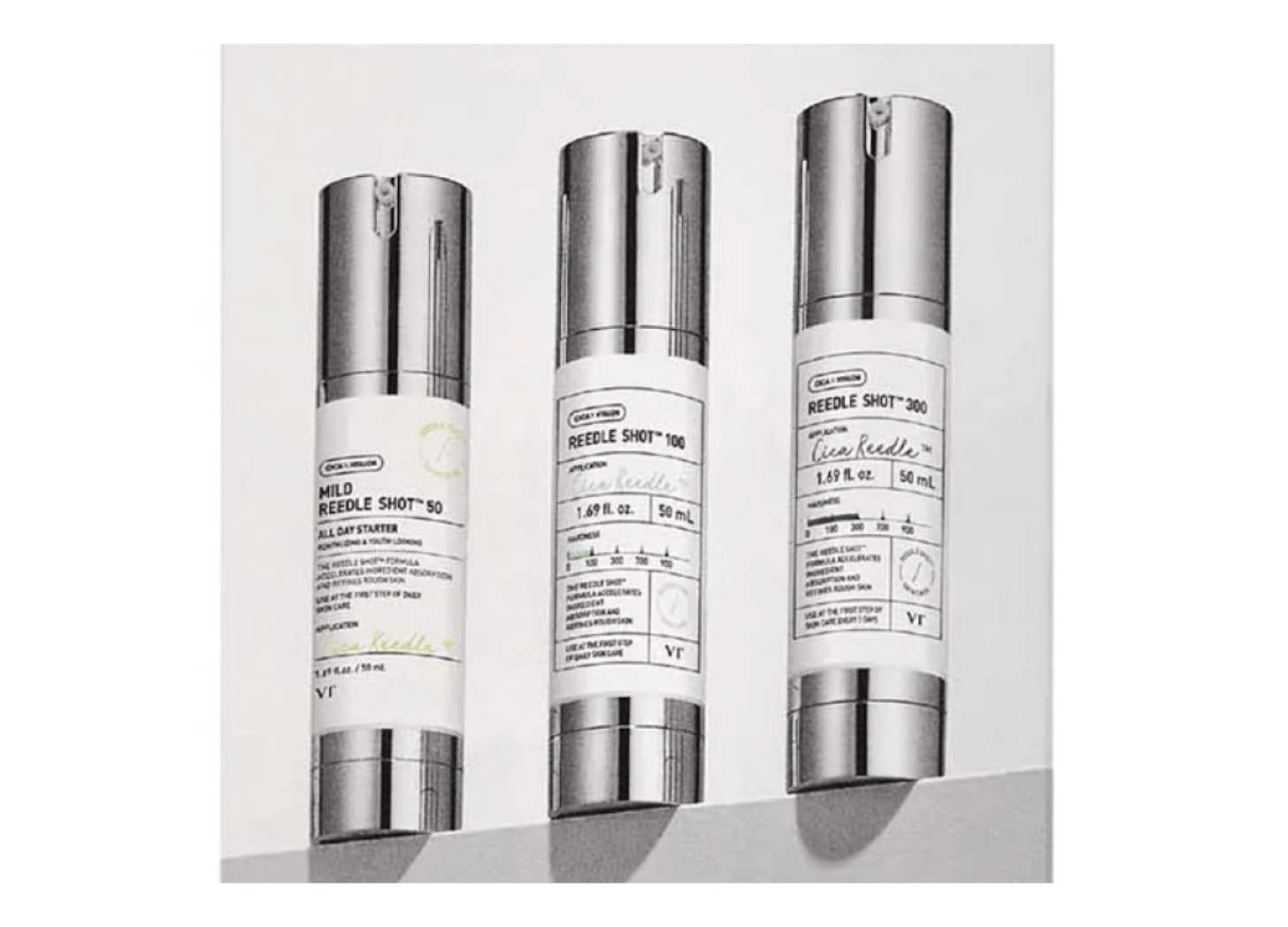
If you’ve been anywhere near skincare social media lately, you’ve seen them described as “liquid microneedling” or “microneedling in a bottle.” You may have specifically seen VT Cosmetics’ Reedle Shot, which has racked up over 100 million organic impressions on TikTok and YouTube and is now sitting on shelves at more than 1,400 Ulta Beauty locations.
So let’s talk about what spicules are, what the science says, and why one of the world’s leading cosmetic scientists ended his analysis of these products with “I am surprised that the FDA has nothing to say.” Spoiler: that’s not a compliment.
First, What the Hell Are Spicules?
Spicules are tiny, needle-shaped crystalline rods derived from freshwater sponges, most commonly a species called Spongilla. They’re about 0.1 millimeters long. When you rub a spicule-containing product onto your skin, those needles dig into the epidermis, creating microchannels, which are temporary openings in the skin barrier that allow topical ingredients to penetrate more deeply.
The particles reportedly remain embedded in the skin for 24 to 72 hours before shedding naturally as part of your skin’s renewal cycle. So yes, we are talking about microscopic sponge needles living in your face for up to three days. The “liquid microneedling” marketing conveniently leaves out that part.
The side effects are exactly what you’d expect: tingling, stinging, redness, and sensitivity. If you have a compromised skin barrier, rosacea, active breakouts, or generally reactive skin, this is not the ingredient category for you.
The K-Beauty Pipeline Problem
Spicules have been a staple in Korean skincare for years, but the product that put them on the global map is VT Cosmetics’ Reedle Shot. It’s been going viral since late 2023 and shows absolutely no signs of slowing down.
The concept is simple, and the marketing is genius: the product comes in four concentrations — 100, 300, 700, and 1,000 spicules per milliliter — so you can essentially dial up how aggressively you want to be stabbed by sponge needles. The 100 delivers a faint tingling prickle. The 700 causes visible redness for up to an hour after application. The brand sells this as a feature. 😳
Reedle Shot is positioned as “Step Zero” — applied before your serums to create microchannels that help everything that follows penetrate more effectively. For context, this is not a cult product quietly finding its audience. This has been a full mainstream rollout.
The spicule serum market is projected to grow at a compound annual growth rate (CAGR) of 10.4% by 2035. Rael was the first Korean brand to launch a spicule serum on US shelves in 2025. But VT Cosmetics is the most prominent name in the space. Medicube and Cosyuree also offer spicule products.
Here’s the thing about trending K-beauty ingredients: they’re often genuinely innovative, occasionally brilliant, and almost always arrive in the US with a marketing narrative that outpaces the scientific evidence. Spicules are no exception.
What the Science Actually Says
There is a 2022 peer-reviewed study in the Journal of Cosmetic Dermatology on spicules as a dermal delivery system, and it does show real promise for improving ingredient penetration. There’s also solid evidence that pairing spicules with tranexamic acid makes sense for hyperpigmentation: tranexamic acid genuinely needs help reaching the basal layer of the epidermis, where melanin production happens, and microchannels provide a more direct pathway.
What the scientific data does NOT support is the broader sweep of efficacy claims being applied to every product that contains the ingredient.
Dr. Paolo Giacomoni — former Head of Biology at L’Oréal, former Executive Director of Research at Estée Lauder, author of more than 100 peer-reviewed publications — recently wrote about spicules for Happi magazine. His take on the scientifically sound pairings (spicules + tranexamic acid): reasonable. His take on one brand’s claim that spicule-containing products improve skin permeability “by up to 342%”: “I am very curious about how this number has been determined.”
That’s a polite dig at cosmetic marketers from Dr. Giacomoni, who has spent his career doing actual scientific research. Once again, cosmetic marketers are making claims long before clinical scientific data can back them up.
Ingredient Pairing: The Good, the Meh, and the Wishful Thinking
Not all spicule products are created equal. What you’re pairing them with matters.
Tranexamic acid is the strongest argument for spicule-based formulations. It’s proven effective at brightening hyperpigmentation, but the ingredient has historically struggled with penetration. The combination makes scientific sense.
PDRN (polydeoxyribonucleotide), derived from salmon sperm DNA, is also appearing in spicule formulas as a moisturizing polymer. Another plausible pairing, despite a lack of peer-reviewed scientific data validating PDRN’s efficacy (but that conversation is for another article).
Niacinamide, on the other hand, is water-soluble and readily crosses the epidermis on its own. Adding spicules to “enhance” niacinamide penetration is like hiring a locksmith to open a door that was already unlocked. Not harmful, just unnecessary — and you’re probably paying a premium for it.
Then there are serums and overnight masks that pair spicules with collagen peptides. Here’s the thing about collagen in topical products: the molecules are too large to penetrate the skin. Microchannels are not going to solve this problem. A spicule product that delivers collagen is trying to impress you by highlighting a limitation it can’t overcome.
The Regulatory Question Nobody Is Asking
Spicules create actual, physical microperforations in the skin barrier. They’re essentially replicating the mechanism of medical microneedling devices, which, in the appropriate setting, should be administered by a trained practitioner who understands regulatory oversight and relevant contraindications.
Cosmetic products containing spicules are not classified as medical devices. They’re cosmetics, which means the bar for safety oversight is substantially lower. Dr. Giacomoni noted his surprise that the FDA has been quiet on the subject. Whether that changes as the spicules category grows is worth watching. When products in this category are already sitting in 1,400 Ulta locations and generating nine-figure social media impressions, “the FDA has nothing to say” starts to feel less like an oversight and more like a disaster waiting to happen.
For now, these are products that mechanically disrupt the skin barrier and create temporary entry points for whatever active ingredients are in the formula. That’s a meaningful consideration for clients with sensitive skin, open wounds (active acne), or skin conditions, as well as for anyone who’s had recent cosmetic procedures.
#MyTwoCents
Spicules aren’t a scam. The mechanism is real, some ingredient pairings are scientifically sound, and when matched with the right actives for the right skin concerns, there is genuine benefit.
But “liquid microneedling” is a marketing phrase engineered to make something sound both effective and safe simultaneously. Actual microneedling works. It also has protocols, contraindications, and, in a medical setting, oversight. “Liquid microneedling” has no oversight.
Before you start rubbing sponge needles on your face three nights a week because a brand promised a 342% improvement in skin permeability, make sure you understand what they’re actually doing.
What’s in the bottle matters:
Which actives are paired with the spicules?
Do those actives actually need help penetrating the skin barrier?
Does your skin have any conditions that increase the risk of barrier disruption?
The ingredient isn’t the problem. The hype and the number of products containing it that are flooding the market without proper scientific validation IS the problem. Buyer beware.
What do you think? Let’s discuss this in the comments.
Kevin James Bennett is the publisher of In My Kit®. He is an Emmy Award-winning makeup artist, cosmetic developer, educator, and consumer advocate. Learn more at www.kjbennett.com
Love hearing your take on this. My skin didn't like these, nor did I see any big glow-up afterward. Maybe I didn't use them long enough/consistently enough, but there's plenty of skincare I see both long-term and immediate results from that doesn't feel like my skin's burning from 1,000 tiny suns.
In Australia these products are not available in stores as far as I’m aware.
I don’t understand why these products are readily available in the US. It sounds more like an in clinic treatment that should be performed by aestheticians.