


Summer is almost here, and if you’ve ever stepped out of an over-air-conditioned building into suffocating July heat and felt your skin go hot, prickly, and uncomfortable, you’re experiencing what I like to call compound dehydration. It can quickly undermine all the good intentions of your regular skincare routine. You need some additional tools to prevent this and keep your skin happily hydrated.
As temperatures climb, your body ramps up perspiration to regulate your body temperature, releasing a higher percentage of your skin’s stored water through your pores and depleting your reserves. Meanwhile, the forced-air cooling that keeps you comfortable indoors does the opposite, by removing moisture from the air and accelerating the dehydration of your skin's surface.
Your barrier is getting hit from inside and out: THAT is compound dehydration.
The smart move is to get ahead of this early with a two-part strategy: fortify your skin barrier, then flood it with additional, stable hydration. Today, I’m offering a few recommendations for mists, essences, and serums you can layer into your existing skincare routine before summer arrives to help protect your skin's moisture level. Many of my favorite targeted hydrators feature polyglutamic acid (PGA), a significant upgrade over hyaluronic acid (HA).
Let’s discuss why…
Hyaluronic Acid Is Sooooooo Yesterday
Many board-certified dermatologists and plastic surgeons, who remain up to date on advances in skincare ingredients, now recommend PGAs over HAs. Particularly because many of their clients have experienced irritation and skin-barrier damage from skincare formulations containing improperly calibrated HA molecule weights.
About HAs:
Hyaluronic Acid (HA) is allegedly capable of absorbing about 1,000 times its weight in water, but it has some nasty side effects. HAs absorbtion rate is determined by molecular weight. Some HAs have medium-to-low molecular weights and penetrate beyond the stratum corneum (skin’s surface) into the epidermis, while others with ultra-low molecular weights can penetrate even deeper into the upper dermis. If you do not apply sufficient moisture (water) on top of HAs, they will absorb your skin’s subcutaneous water reserves, dehydrating it as the molecules swell, disrupting and damaging your skin barrier.
About PGAs:
Polyglutamic Acid (PGA) is a fermented soybean peptide that holds approximately 5,000 times its weight in water, far surpassing the water retention capacity of HAs.
The biggest difference is that PGAs remain safely on the skin's surface, primarily in the stratum corneum, forming an occlusive, hydrating film that locks in moisture and significantly slows water loss throughout the day. For dehydrated skin with a compromised barrier, PGA’s surface-level molecular structure provides immediate hydration while protecting against environmental stress. PGA also stimulates your skin’s natural moisturizing factors, helping it maintain hydration on its own, making it far more effective than HAs for safe, lasting results.
What to Look For
From all the clinical data I’ve researched, the winning combination for dehydrated skin with a compromised skin barrier is:
Polyglutamic Acid for superior moisture retention
Ceramides to rebuild your barrier
Glycerin to draw and bind moisture from the atmosphere to the skin
Products combining these three powerhouse ingredients address both dehydration and compromised skin barrier function, delivering significant hydration that actually lasts rather than evaporating hours after application and cannibalizing your skin’s moisture reserve.
First, An Emergency Treatment:
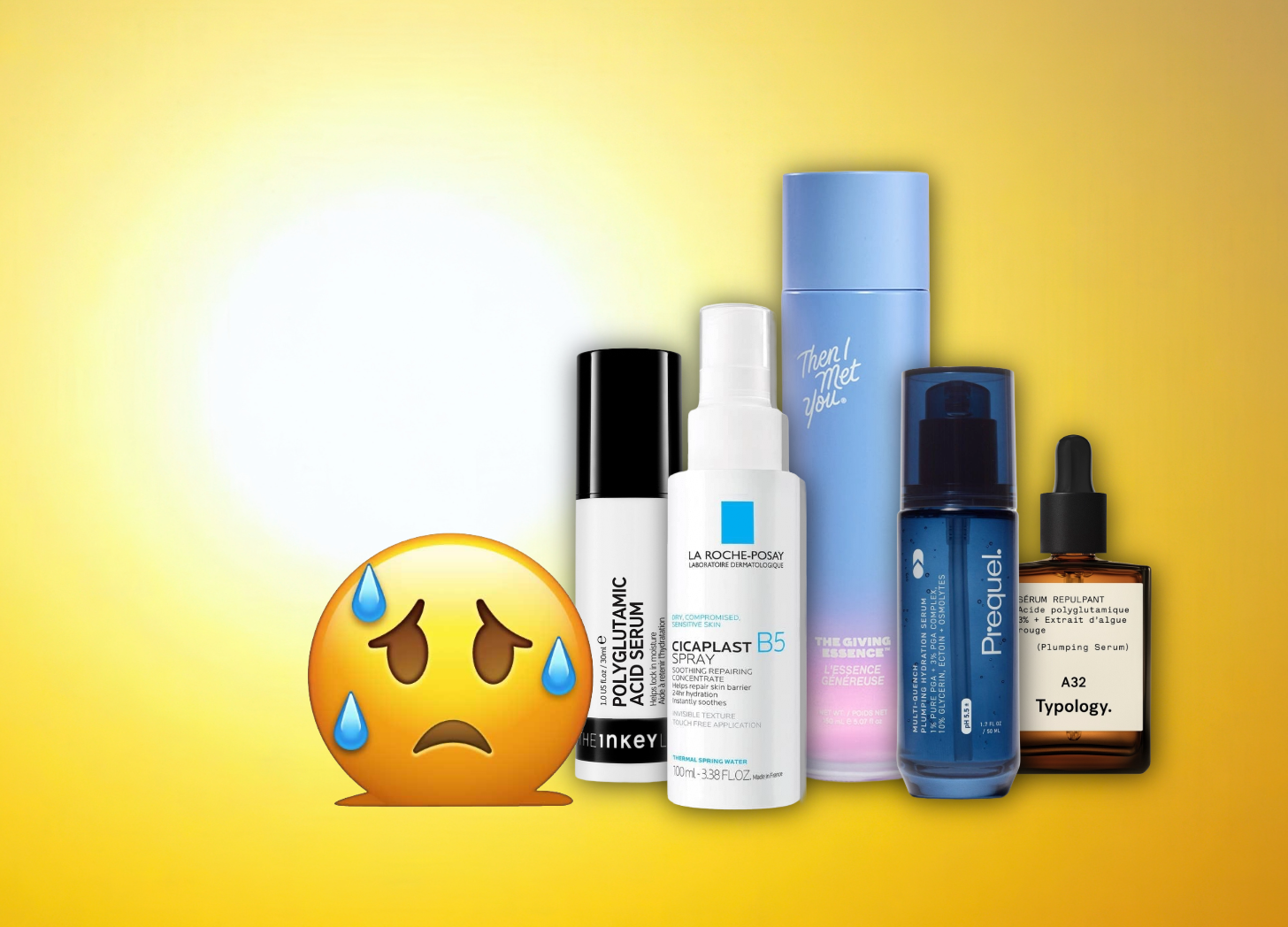
La Roche Posay - Cicaplast B5 Spray ($25.00 USD) is a relatively new product, but it has already made a BIG impact in the treatment of compromised skin barriers. The targeted barrier-calming and repair spray contains 5% panthenol and madecassoside, a powerful soothing compound derived from the Centella Asiatica (Tiger Grass) plant. Madecassoside is used extensively in K-Beauty skincare and is known for its potent anti-inflammatory, antioxidant, and skin-barrier-strengthening properties.
The Cicaplast B5 Spray also features a mineral complex containing copper and manganese, which are highly anti-inflammatory and reduce redness, swelling, and discomfort on contact while controlling inflammation and accelerating wound healing. Many dermatologists recommend the Cicaplast B5 Spray for patients whose skin has been sensitized by reactions to highly active skincare products (acids, retinoids, etc.) and invasive in-office procedures (lasers, microneedling, peels, etc.). The spray provides immediate soothing relief while initiating barrier repair.
My Recommendations for Advanced Hydration
(listed by price, not ranking)
The INKEY List - Polyglutamic Acid Serum ($16.00 USD) delivers 3% polyglutamic acid and glycerin in a lightweight, silky formula, widely available at Sephora, Ulta, and major US retailers. It holds 5 times more moisture than hyaluronic acid, creating a breathable, protective film that slows moisture evaporation throughout the day.
EXTRA CREDIT: This serum is inexpensive enough to cocktail with your favorite body lotion/cream to SUPERCHARGE its effectiveness at handling dehydrated skin on your body.
Prequel - Multi-Quench Plumping Hydration Serum ($28.00 USD) features dual-weight polyglutamic acid, glycerin, and ectoin, a powerful osmolyte that protects skin from environmental stress while supporting barrier health. The dual-weight PGA formula works at multiple levels to provide both immediate and lasting hydration. The focused formula omits unnecessary ingredients, making it ideal for sensitive or compromised skin.
Then I Met You - The Giving Essence ($53.00) combines polyglutamic acid with galactomyces, niacinamide, and antioxidant-rich berry extracts. The PGA works on the surface to deliver long-lasting moisture retention, while the other ingredients nourish, brighten, and strengthen the skin barrier.
Typology Plumping Serum with 3% PGA + Red Seaweed Extract ($55.00 USD) is a highly concentrated serum that applies more like an essence (very aqueous and fluid), and sets as a moisture-binding film on the skin’s surface, while the red seaweed extract stimulates natural ceramide synthesis. This formula is specifically formulated for significantly dehydrated mature skin.
#MyTwoCents
Over the past few years, an alarming number of licensed skincare “experts” (dermatologists, plastic surgeons) on social media platforms have shifted from peer-reviewed citations to validate their product recommendations, and have discovered the monetization ($$$) enjoyed by beauty influencers. Many of their posts are now motivated by brand sponsorships and affiliate links - not clinical scientific data. They use their licenses as “expert” validation to promote whichever brand is willing to cut them a check, not because the product is purposeful and effective, but because THEY ARE GETTING PAID.
And a disturbing number of them don’t disclose this properly.
If licensed skincare professionals are selling out for cash and clicks, the question becomes: Who do you trust?
THE DATA. PERIOD.
Do what I do and perform some research before you consider making a purchase. If a brand can’t support its marketing claims with peer-reviewed clinical data, walk away. And if you see the words “proprietary blend,” treat that as a red flag. It’s a marketer’s trick to avoid transparency about ingredients.
Trust the data — NOT the marketing.
Since 2005, IN MY KIT® (IMK) has been committed to providing the most factually sound reviews and product recommendations for beauty professionals and enthusiasts.
IMK posts are not sponsored.
IMK does not use affiliate codes or links.
All links have been screened to find the best prices and avoid counterfeits.
Kevin James Bennett is the publisher of In My Kit®. He is an Emmy Award-winning makeup artist, cosmetic developer, educator, and consumer advocate. Learn more at www.kjbennett.com
You're psychic, Kevin. I JUST thought to myself this morning that I need to pick up some Prequel Multi-Quench. I notice a visible difference without it, especially after a tretinoin night.
I’m really enjoying the Prequel product you turned me on to. It is an anti-redness serum. Should I try more of their things?