


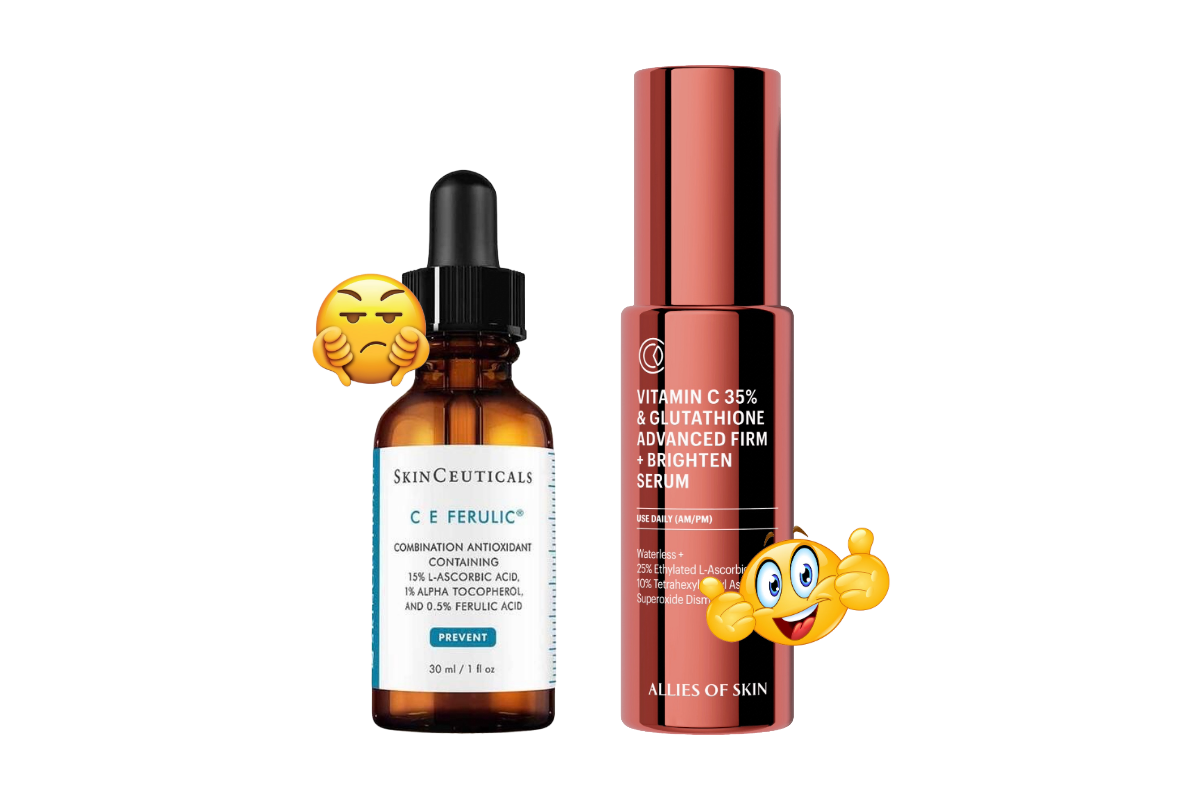
A few weeks ago, I was benchmarking some premium skincare for a development project, and something struck me: some brands spend years perfecting their most active formulations, then package them cheaply, which pretty much guarantees those actives will degrade before the consumer gets their money’s worth.
Example: You’re selling a $185-per-ounce Vitamin C serum in an inexpensive, generic amber glass dropper bottle that begins to oxidize and lose potency the moment it’s opened and exposed to air? And don’t get me started on the contamination issues with the dropper (pipette) being exposed to bacteria with every application, then put back in the bottle.
The thing that infuriates me most? It’s not accidental. It’s deliberate.
The Chemistry Aspect
If you work in product development, you already know this part. Retinoids (vitamin A derivatives), vitamin C, high-concentration peptides, antioxidant plant extracts, fermented complexes, enzymes—these ingredients don’t sit still. They’re active. Light-sensitive. Oxygen-reactive. Air-reactive. They degrade. They oxidize. They break down.
Most premium skincare relies on at least one of these actives, often a carefully calibrated cocktail of a few. And when you’re formulating with them, you’re not just mixing ingredients; you're making a commitment to stability. Your mindset should be, “This formula needs to remain potent and effective from the moment it leaves our facility to the moment a consumer uses the last drop.”
That should be the implicit promise to justify the premium price point.
So you put it in a dropper bottle? 😠
Every time you open a dropper bottle and remove the pipette (the glass dropper), you’re introducing air into the bottle, causing oxidation, and then returning that pipette to the bottle after it has come into contact with your skin (fingers, palm, face).
So you put it in an open-mouth jar? 😠
That jar of premium moisturizer on the bathroom shelf, which you open twice a day, is exposed to light and humidity. Then there’s the bacteria from your fingers scooping out the product, and environmental particles going straight into the open, exposed jar. So you end up with a product that’s actively degrading the first time you open it, and every single time you use it.
Why Brands Make This Choice
Look, I get the business side of this. Opaque UV-protective and airless containers are more expensive. But when you’re already positioned at a premium price point, more protective packaging choices should be the standard, not optional.
But those additional manufacturing dollars spent on better protective packaging reduce profit margins. And that’s where brands cut corners.
But there’s also the aesthetic disconnect, which I find amusing - well, annoying.
Since when has a generic glass dropper bottle or basic jar you can pick up through LotionCrafters or MakingCosmetics evoke feelings of a premium product experience? But brands are charging upwards of $200 for an active serum or moisturizer in a generic package that does very little to preserve the product's stability or efficacy.
Yes, I’m looking at you, Skinceuticals, and don’t get me started about the Dr. Sturm bullsh*t - a wildly over-priced $350 HA serum (one ounce) in a generic glass dropper bottle with a cheap white plastic top.
Then there’s the accountability angle.
A consumer starts using an expensive skincare product in compromised packaging and, within weeks, notices diminishing results. Most brands will deny accountability, even though they know their packaging wasn’t ideal for the formula.
They blame the consumer: maybe you didn’t store it correctly, maybe your skin type doesn’t respond to these actives, maybe it’s just not the right formula for you…
Blah, blah, blah. 🙄
The brand’s packaging choice never seems to enter the conversation. Which is convenient for them, but frustrating AF for those of us forking over lots of $$$ for an allegedly stable, premium formula.
What Actually Works
A bottle or jar made of opaque UV protective glass, an aluminum bottle or tube, airless pump bottles, jars, and tubes - these options are not only functional in preserving product efficacy but can also be decorated to look premium while protecting the formula inside. Yes, this packaging costs more, but it says: we care about the stability of our formula and the investment you’ve made in our product.
Allies of Skin get this right.
Sophisticated, highly active formulations at a premium price point. BUT… their highly active serums are packaged in beautifully decorated, mirror-finish, opaque glass bottles with pumps - not cheap dropper bottles. Even their daily moisturizer comes in a tube with an airless pump, because they decided the formula’s integrity matters more than saving $$$ by putting it in a generic glass jar with an open mouth.
It’s a business choice that says: We spent time making sure this formulation met our standards. We’re going to spend the additional manufacturing dollars to ensure it survives the journey to the consumer intact and remains efficacious to the last drop. That’s the proper way to position premium-priced active skincare.
Not “We know it looks basic because we spent all the money on what’s inside, not the packaging”, which is a cop-out and a bunch of marketing bullsh*t to justify better margins and higher profits.
Allies of Skin’s packaging tells us, “This formula will remain intact at full efficacy from first use to last, because we designed it correctly.” Premium brands, like Allies, understand that protective packaging isn’t an add-on. It’s part of the formulation promise. And they’re STILL profitable. They’re STILL successful. So, that argument about cost-cutting being necessary for margins? I’m not sure it holds up when you look at brands that refuse to make that trade-off.
The Thing About Formulation
Here’s what I keep coming back to: when you’re a product developer working with unstable actives, the packaging isn’t a separate or secondary consideration. It’s part of the process. You develop the formula, then package it in a component that keeps the ingredients protected and active.
A dropper bottle and an open jar are poor development choices for highly active premium skincare. They’re choices that accept ingredient degradation as acceptable collateral damage. That might be acceptable if you’re selling a product at a much lower price point. But when you’re asking someone to spend $200 on one ounce of La Mer moisturizing cream - in an open jar - the question becomes: are you choosing packaging for stability or for margins? Because at that price point, the ethical choice should be pretty clear.
#MyTwoCents
I think there’s a fundamental contradiction in premium skincare right now. Brands are charging top dollar for formulations with highly potent, but unstable actives, then using packaging that pretty much guarantees those actives will begin degrading as soon as the consumer opens them. And they’re not really talking about that trade-off.
If you’re formulating premium skincare with retinoids, vitamin C, certain peptides, or other highly active oxidative ingredients, you’ve elected to play a high-stakes efficacy and stability game. So commit to it. Spend a portion of your development dollars on protective containers, airless bottles, jars, or tubes. Own the decision to formulate premium products and charge top dollar for them by protecting them.
Or don’t, and be dishonest. Because right now, a lot of very expensive skincare is packaged poorly, and the brands don’t seem to care about the end user’s experience.
What are your thoughts? Let’s have a conversation in the comment section.
Kevin James Bennett is the publisher of In My Kit. He is an Emmy Award-winning makeup artist, cosmetic developer, educator, and consumer advocate.
Learn more at www.kjbennett.com
In the meantime, I thank you for this post and I believe that this very honest message must be spread because today's society truly lives in the illusion of marketing.
Wow. Love this post. I've been loving all things Prequel lately ever since you turned me on to them, and their Vitamin C is packaged in an opaque glass bottle with pump, even at its low price point. It's the first Vitamin C that I feel like might actually stay active through the whole bottle. I'll have to report back on results when I've been using it longer, but my mother commented on how good my skin looked after a bottle of their Multi-Quench serum, so I have high hopes.