


A few months ago, I wrote about the evolving international cosmetic industry clusterf*ck created by the Trump tariffs. That was chapter one. This is chapter two, a critical update on tariffs, consumer price hikes, and why it’s going to get worse before it gets better.
The Numbers Nobody Is Explaining to You
Since Donald Trump’s April 2, 2025, “Liberation Day” tariff rollout, U.S. tariff rates have climbed to over 20% - the highest level in a century.
Let that sink in. We’re operating in a trade environment not seen since before we were born. And the US beauty industry, which imports a vast majority of its printed packaging, components, raw materials, and finished cosmetic goods, is fully exposed.
Here’s where the math gets uncomfortable:
China, which manufactures an enormous percentage of the cosmetics on US retail shelves, is now subject to tariffs of up to 55%.
South Korea, another top source of beauty imports into the U.S. and the engine behind the K-Beauty market here, faces tariffs of 25% or higher.
France and Italy, our main resource for fine fragrance and prestige skincare, both face tariffs of over 20%.
And BASF, one of the world’s largest ingredient suppliers, just announced price increases on amines used in personal care formulations across North America, effective today, April 6th. NOTE: Amines are organic compounds derived from ammonia and are primarily used as pH adjusters, emulsifiers, surfactants, and foaming agents in products such as shampoos, conditioners, and lotions.
Packaging costs alone are projected to rise by 5%-10% industry-wide. In aluminum-heavy categories - aerosols, tubes, closures - the exposure is significantly higher. And these cost increases don’t happen in isolation; they stack up. Raw materials (ingredients), components, secondary packaging, freight, and now legal fees (more on that later) are all rising simultaneously.
Industry analysts now project that retail prices on cosmetics and personal care products will increase by at least 10% to 15% across ALL categories. And a meaningful portion of that increase has already begun to hit the market.
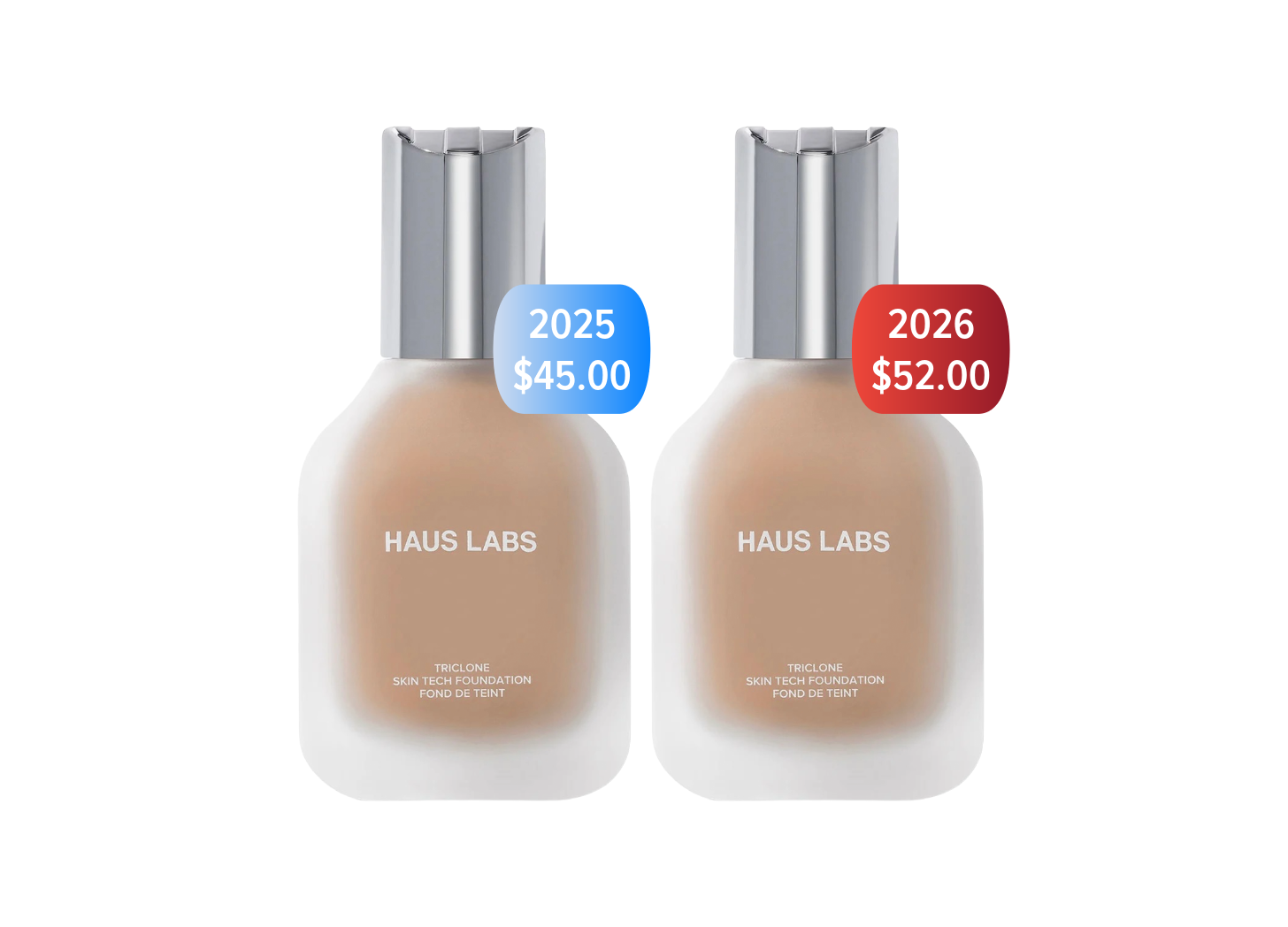
I’ve used Haus Labs as an example of the price increases in the image at the top of the article. There’s been a $7.00 increase in the price of their bestselling Triclone foundation since April 2025. That’s a 15% price increase for one (1) ounce of foundation in less than 12 months!
It’s Not Just Indie Brands Anymore
In my original piece, I focused heavily on independent and emerging brands with no hedging strategies, alternative supply chains, or corporate treasuries to buffer the tariff shock. That story is still true and still urgent. But if you thought the cosmetic conglomerates were immune, I have some news for you.
Procter & Gamble has already raised prices. And Estée Lauder Cos. has publicly disclosed $100 million in profitability headwinds attributable to tariffs. Their “Profit Recovery Plan” includes cutting up to 7,000 jobs and a full reevaluation of pricing across their brand portfolio. That’s not a niche brand making hard choices. That’s one of the most powerful beauty conglomerates, restructuring its business model in real time in response to the tariffs.
E.l.f. Beauty, the brand that built its entire identity on accessible price points to a mass market, raised prices by $1 per SKU starting in August 2025.
On a product that retailed for $10, it’s only a 10% increase, but on a $3 product, that’s a 33% increase. The CEO, to his credit, was remarkably transparent about the reason, and the brand communicated directly with consumers via social media.
The result? About 98% positive sentiment (according to the company), suggesting that consumers are aware of the impact of these tariffs and aren’t necessarily opposed to price increases. They’re opposed to price increases from companies that aren’t being transparent about what’s happening.
The Lip Bar’s founder, Melissa Butler, was candid about the brand’s vulnerability. She shared that 85% of their products are manufactured in Taiwan, with much of the packaging sourced from China and some manufacturing done in Italy. They’ve been hit with a tariff exposure trifecta. Ouch.
The brands being hit in a fundamentally different way are the mid-tier. Established indie brands that have scaled up but are not at a level to absorb these costs as easily as multinational corporations are now stuck between a rock and a hard place.
Meanwhile, Conglomerates Are Suing
Here’s the detail that didn’t make many consumer headlines but absolutely should: L’Oréal, Sol de Janeiro, and Dyson filed lawsuits in February 2026 against the U.S. government, seeking refunds on tariffs already paid.
They’re not alone. More than 1,400 importers have now filed similar suits, following a U.S. Supreme Court ruling that found Trump overstepped his authority by using the International Emergency Economic Powers Act to impose the tariffs in the first place.
Economists at Penn Wharton estimate that reversing the IEEPA tariffs could generate up to $175 billion in refunds across all industries.
So let’s be clear about what’s happening:
Major cosmetic corporations are pursuing legal action to recoup costs they have already passed along, or are in the process of passing along to consumers.
The consumer pays higher prices now. The brand will potentially recover the cost later.
BUT (there’s always a BUT) the consumer, who is being asked to pay $38 for a foundation that used to cost $30 just months ago, will not receive a refund.
Oh, and don’t hold your breath waiting for these brands to reduce prices once they’ve been reimbursed.
The Consumer Backlash Is Building
Consumers are quite aware of the price increases, and they are not amused. A CivicScience survey found that nearly 3 in 10 beauty shoppers (29%) are already planning to cut back on their product purchases if tariff-driven price increases continue. More strikingly, 60% of U.S. consumers said they would stop buying their favorite cosmetics if prices rose more than 10%.
That’s not a fringe group of disgruntled consumers. That’s a majority of your customer base telling you, in plain language, that even brand loyalty has a price ceiling.
The behavioral shift is already visible in purchase data. Some 38% of beauty consumers say they’re buying fewer products due to inflation. Another 37% say they will only purchase with coupons and discount codes. And 35% have traded down to cheaper brands.
Dupe culture, which I’ve written about as a consumer trend, is looking less like a Gen Z phenomenon and more like an economic survival strategy.
What’s making the backlash grow faster is the transparency gap. Most brands have not communicated clearly with their customers about why prices have gone up. A quiet $4 increase at checkout, with no explanation, breeds resentment.
E.l.f.’s transparency about their price increases demonstrated that honesty - even about unwelcome news - can actually strengthen brand loyalty. Unfortunately, that mindset has not been widely adopted across the cosmetic industry, and consumer resentment is growing quickly.
Which Categories Are Most Exposed
Not all products face the same risks, and if you’re a professional advising clients or a consumer trying to protect your budget, it helps to know where the pressure is most concentrated.
Color Cosmetics: Faces significant exposure because of heavy reliance on Chinese raw materials, manufacturing, and packaging.
K-Beauty: This is deeply ironic given that K-Beauty has spent a decade positioning itself as high-quality skincare at an accessible price point. That positioning becomes impossible to maintain when you’re faced with import costs of 25% or more.
Aerosols: Hair sprays, setting sprays, dry shampoos, body mists, etc., are particularly vulnerable because aluminum tariffs compound the already increasing materials and manufacturing costs.
Fragrance: France and Italy, two of the world’s premier sources of fine fragrance components, are now both subject to tariffs of 20% or more. Expect some of the sharpest price increases to hit prestige fragrances.
What Happens Next
The honest answer is: we don’t fully know. The tariff landscape is still in legal limbo, with multiple court challenges proceeding simultaneously. If the IEEPA tariffs are ultimately struck down, there will be refunds to brands - but the likelihood that those refunds reach consumers is slim to none.
It’s pretty clear that in 2026, we will continue to see price increases. The brands that haven’t raised prices yet are likely to do so before year-end, particularly in Q3 and Q4, as new inventory cycles through at post-tariff costs.
The brands that will navigate this best are those with diversified manufacturing and those with genuine consumer trust built through consistent communication.
The brands that will struggle are those that relied on marketing price point as their primary value. They are now being forced to pivot their marketing strategy toward product efficacy rather than affordability.
#MyTwoCents
Let’s call this what it is: a slow-moving price crisis that the industry knew was coming and is handling with wildly inconsistent levels of honesty.
The tariffs aren’t a surprise. The supply chain exposure wasn’t a secret. What is surprising is how many brands assumed they could quietly pass along cost increases without a single word to the consumers who’ve been loyal to them.
The e.l.f. strategy is illuminating. They told their customers what was happening, why it was happening, and what it meant for prices. They were rewarded with 98% positive sentiment. That’s not an anomaly; that’s what happens when you respect your customer’s intelligence and are transparent.
The truth underneath all of this?
Indie brands can’t build and scale their businesses without capital, which will be scarce if their products become unaffordable.
Prestige and Luxury cosmetic conglomerates can’t hide behind their sheer size or legacy status. Price increases could prompt consumers to trade down to mass market products or dupes…and they might not return.
And today’s cosmetic consumer, who has more information and more options, has run out of tolerance for the industry’s lack of transparency.
The brands that come out of this strongest won’t just be the ones with the savviest supply chain strategies. They’ll be the ones whose transparency allowed customers to trust them enough to stick it out through this difficult stretch.
What are your thoughts? Will you continue to purchase your favorite cosmetic products at higher prices, or downgrade to less expensive options?
Kevin James Bennett is the publisher of In My Kit®. He is an Emmy Award-winning makeup artist, cosmetic developer, educator, and consumer advocate. Learn more at www.kjbennett.com
Remember when prices increased during COVID, and they said it was temporary? It wasn’t. Once the market proves what we will bear, that’s where prices stay. Companies suing for tariffs do absolutely nothing for consumers, no matter how transparent they are, while they take our money. They will report record profits, and nothing will be done. It’s all a SCAM!
Such a tricky situation, especially if tariffs get refunded. I have had to raise the price of several of my products but plan to reduce those prices when I re-order, as long as Trumps tariffs are no longer being charged.