


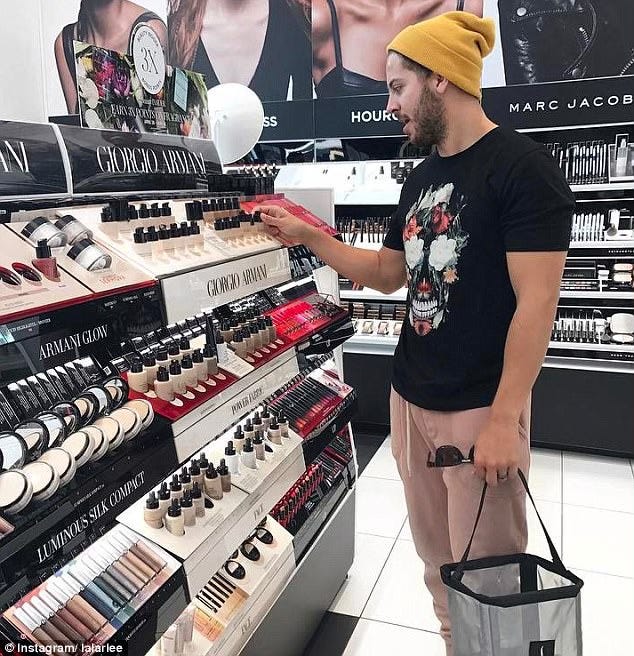
Walk into any Sephora or Ulta nowadays, and you’ll spot a seismic shift: a lot of the same straight guys who thought wearing makeup was “gay” are casually browsing the concealer wall, testing foundation shades on their jawlines, debating the merits of different setting powders. 😳
The men’s grooming market has exploded, but we’re not just talking about moisturizers and eye creams anymore. We’re talking about actual color cosmetics - tinted moisturizers, concealers, color correctors, bronzers, the works. What was once the domain of LGBTQ+ men doing get-ready-with-me makeup tutorials and product reviews has become remarkably mainstream among heterosexual men.
The irony: Many of these same straight guys spent years mocking the brave LGBTQ+ guys who normalized this shift in acceptance of men wearing makeup.
From Ridicule to Routine
The transformation has been stark. The same men who once left brutal comments on YouTube makeup tutorials—mocking “boys wearing more makeup than our girlfriends,” are now stashing a tube of concealer in their work bags. The guys who made James Charles and other young male beauty creators the target of endless jokes now casually pat translucent powder on their T-zones before client meetings.
High-definition cameras on Zoom calls revealed every flaw. Instagram close-ups became unavoidable. The pandemic normalized skincare routines, which naturally evolved into color cosmetics. Suddenly, “just looking polished” became a career advantage, not vanity.
But the infrastructure for this acceptance was built by the exact people who faced the most ridicule. Young men who filmed tutorials in their bedrooms, who weathered death threats and slurs, who insisted that makeup had no gender—they’re the reason guys can now walk into Ulta without batting an eyelash.
The Industry Responds
Companies caught on years ago, though it’s taken time for mainstream acceptance to catch up. Tom Ford launched a men’s beauty line in 2013, featuring a bronzing gel and concealer. Chanel followed in 2018 with Boy de Chanel, becoming the first major luxury brand to create a dedicated men’s makeup line. UK brand War Paint launched the same year, eventually opening what they claimed was the world’s first men’s makeup store on London’s Carnaby Street in 2021.
The War Paint marketing carefully avoids anything too “feminine”—it’s all about “looking sharp” and “professional confidence.” The packaging comes in matte black compacts and navy tubes. The formulas are often identical to those of products marketed to women, just rebranded with a masculine energy.
The guys now casually using concealer before dates or bronzer before presentations weren’t the pioneers—they were the beneficiaries. The young creators who faced ridicule, harassment, and even death threats did the heavy lifting.
What these brands won’t mention is that their market exists because a generation of young LGBTQ+ creators absorbed the mockery, kept posting, and slowly, persistently changed the culture.
Those “boys in makeup” who were called every slur in the book made it safe for the “bros” to bronze up before happy hour. They normalized the idea that makeup has no gender, that self-care isn’t weakness, and that wanting to look your best is just practical.
#MyTwoCents
And here’s the uncomfortable truth: most of these new makeup-wearing heterosexual men have never acknowledged the debt. No apologies to the creators they mocked. No recognition of who paved the way. Just a quiet pivot from ridicule to routine, as if they’d always been on board.
Maybe acknowledging that the freedom to grab a concealer without shame came at someone else’s expense? Then again, maturity and self-awareness aren’t exactly predominant “bro” characteristics. But hey, at least their skin looks great on Zoom calls now. 🙄