


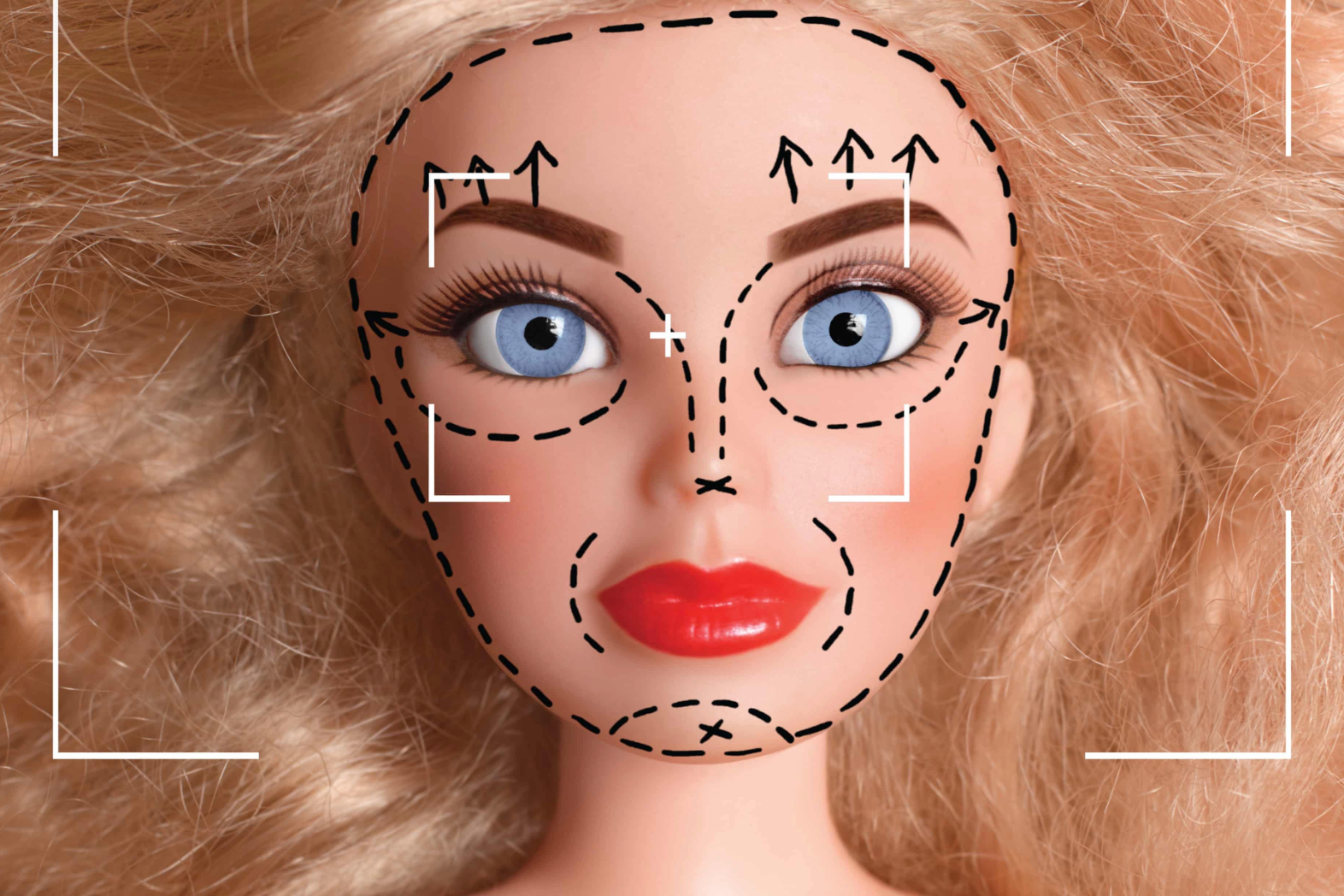
For over a decade, the beauty playbook was simple: smooth it, freeze it, FIX IT. Perfection was the goal, and if you couldn’t get there naturally, there was always a needle, a peel, a laser, or surgery waiting to get you closer.
But something has shifted in a way we didn’t expect, and it’s not subtle. People are actively opting out of the obsession with perfection, and they’re not doing it quietly.
AI as the tell.
The loudest pushback has come from an unexpected place: the public’s reaction to AI-generated content. “AI slop” became a defining phrase over the last few years, shorthand for content that’s visually flawless and emotionally empty. Everything looks perfected, and feels totally devoid of anything organic or natural.
McDonald’s found this out the hard way with an AI-generated holiday ad in the Netherlands last year. It was labeled “AI slop,” faced backlash almost immediately, and was quickly removed.
Here’s the part that matters for the beauty industry: the AI slop backlash was never really about AI. It was about people finally understanding a feeling that had been nagging away at them for years: flawless and fake had quietly become synonyms. Once you learn how to spot digital manipulation (Photoshop), filters, and AI in an ad, you start noticing it everywhere. Including cosmetic marketing and advertising.
The perception of beauty is reversing course.
Plastic surgeons are watching it happen in real time. There’s a trend circulating in the beauty industry right now with a very blunt, yet not unexpected name: the “de-Kardashian-ification” of America. Patients are dissolving filler, removing implants, and reversing BBLs in favor of changes that more closely resemble natural human bodies. One prominent New York plastic surgeon put it plainly: good work is supposed to look natural and healthy, not computer-generated.
That’s not a small correction. That’s an entire industry quietly admitting the goalposts have moved. People are rejecting the frozen, unnaturally smooth and proportionate “Instagram Face,” the exaggerated hourglass figure (breast implants, rib removals, and BBLs) that used to signal success and status. They are no longer the “flex” they were just a few years ago; they now read as suspicious (fake) and almost cartoonish. What’s replacing it is a kind of stealth-wealth look: toned over exaggerated, structure over volume, work so precise it looks like good genetics. The goal is no longer perfection. It’s believability.
What “imperfect” looks like right now.
This isn’t just a beauty industry story. It’s showing up everywhere people spend money on how things look:
Baroque pearls, once considered the defective cousin of the perfectly round pearl, are now the trend. Irregular, lumpy, no two alike, and priced accordingly.
Linen clothing that wrinkles the second you sit down, worn on purpose, ironed rarely.
Handmade ceramics, wobbly rims and all, replacing the coveted machine-perfect Hermes and Versace dinnerware sets.
Sheer skin tints that let freckles, texture, and the occasional blemish show through instead of erasing them.
Freckle tattoos, which is the funniest one on this list. We spent decades bleaching, lasering, and covering freckles, and now people are paying to add fake ones back.
Lip stains engineered to make your natural lips look just a little more defined, instead of overfilled and overdrawn.
Look at that list again. Many items represent a perceived flaw that once required “a fix.” Now imperfection is a goal.
This isn’t laziness, and it isn’t nostalgia.
I want to be clear about what this trend actually is, because it’s easy to misread it as people giving up. It isn’t.
The freckle tattoo, the baroque pearl necklace, and the linen shirt all require professional design, and that costs $$$. But nobody’s opting out of spending money. They’re opting out of spending money on products and procedures manufactured to emulate perfection.
What people are currently interested in buying is evidence. Evidence that a human hand touched this. That this pearl was formed exactly the way nature intended it, and nobody smoothed it out. That this face still moves, has expression lines, and has texture because it belongs to an actual person who has lived an actual life. In a social media feed full of content that is likely to have been filtered and “fixed,” actual textures and normal irregularities have become the proof you’re looking at something real.
That’s a significant correction, and it’s not anti-beauty. It’s anti-fake.
#MyTwoCents
I’ve spent my career helping people look like the best version of themselves, so this is not the point of view of an outsider looking in. I’ve watched an entire generation be brainwashed into believing that “flawless” is the endgame, and I’ve watched what it actually costs people to play that game. Time, money, pain, and a willingness to reject what makes them individuals - their flaws.
What I find genuinely hopeful about this shift is that people are beginning to accept there is no such thing as human perfection, and they’ve stopped lying about what they’ve done to try and achieve the unachievable. People are becoming increasingly interested in looking like the best version of THEMSELVES, rather than striving to look like a clone of someone else (a Kardashian/Jenner).
Imperfection is no longer the enemy, and I couldn’t be happier.
What do you think? Let’s discuss this in the comments.
Kevin James Bennett is the publisher of In My Kit®. He is an Emmy Award-winning makeup artist, cosmetic developer, educator, and consumer advocate. Learn more at www.kjbennett.com
NOTE: All IMK articles are researched and fact-checked using Perplexity software. The actual articles are written by KJ Bennett. The Pangram software licensed by Substack for AI detection is flawed, and its scores have been proven wrong, despite the accuracy figures claimed by Pangram’s marketing.
Read more here.