

Men Are Spending Significant $$$ on Personal Grooming
So Why is the Cosmetic Industry Still Treating Them Like an Afterthought?

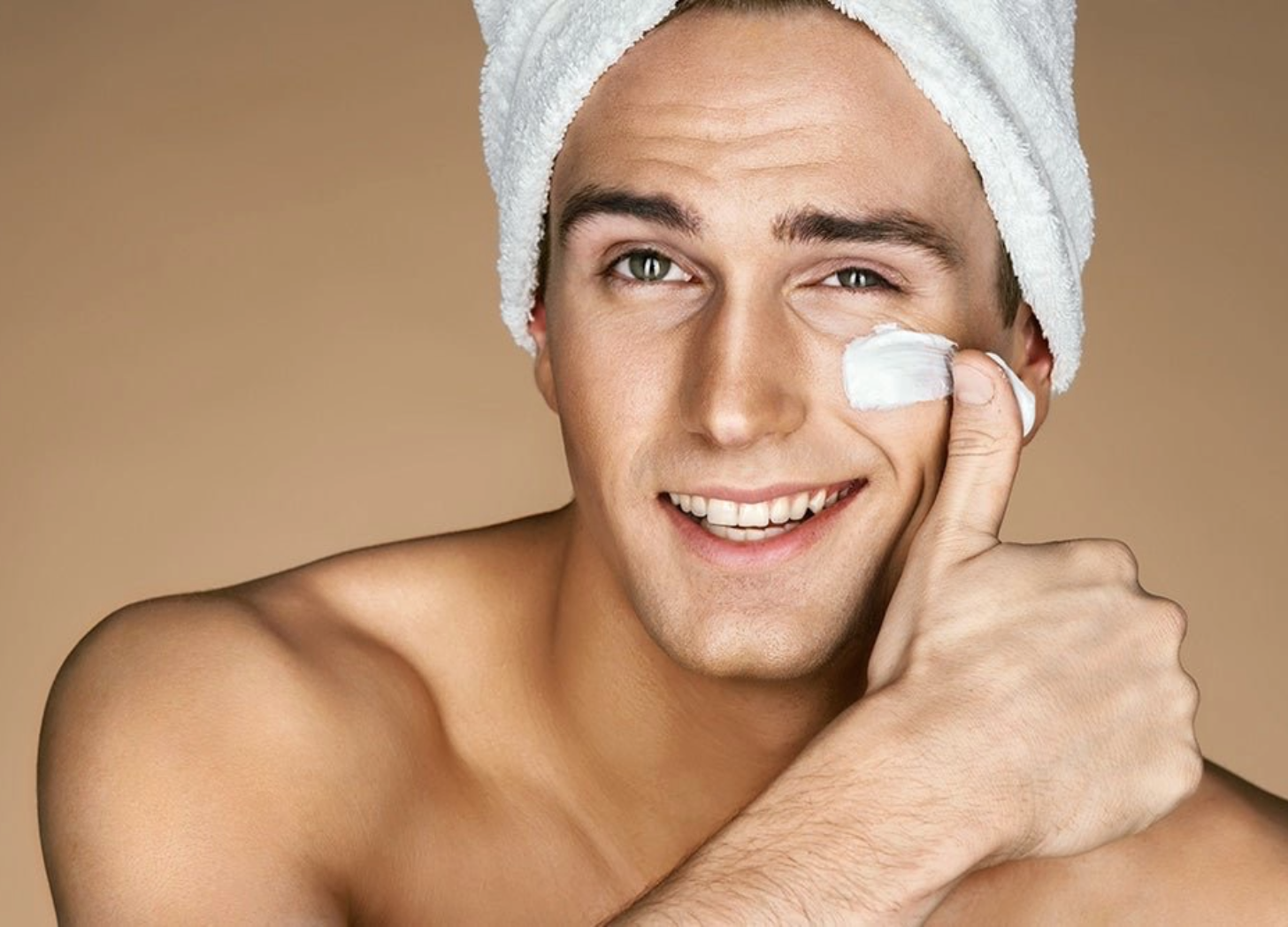
Men have been spending an unprecedented amount of money on personal grooming (skincare, haircare, body products, fragrance) since COVID. So why is the cosmetics industry still doing the bare minimum, still pushing uninspired, dumbed-down, gender-coded products on them? This is 2026, and the data is ALREADY telling the story. When are cosmetic marketers going to WAKE THE F*CK UP?
Let’s begin by talking about the wall the cosmetic industry has built to segregate genders, and then have the audacity to pat themselves on the back for being “inclusive.”
We’re living in the 21st century, yet cosmetic marketing remains notoriously antiquated and gender-specific. Serious, cutting-edge skincare, haircare, and body products are formulated for and marketed to women. Men are placated with a few oversimplified basics that smell like cologne and are presented in “masculine” packaging, with the word “MEN” prominently displayed - so there could be no question as to who this product is for. The message is clear, even if no one says it out loud. This space is not designed for men, but here’s a bar of soap named after Bigfoot to make you feel included (looking at you, Dr. Squatch).
Then COVID happened. Men stuck at home looked at themselves in the mirror for over a year, realized they could look better, and quietly started researching and making choices.
The industry noticed the influx of money (and liked it), but the way they’ve responded makes it obvious they’re not reading the room. Or the data.
The Numbers Don’t Lie
This isn’t a trend. It’s a shift that was building slowly for years, then hit fast-forward when the world went into COVID lockdown. And the numbers don’t just show men spending more. They show something the industry has been trying to ignore: the brands embracing gender-neutral marketing are outpacing brands that continue to push gender-coding to women or men separately.
Here’s the thesis, backed by three years of revenue data. Circana and the SeeMe Index have tracked beauty brand performance annually, and the results are unambiguous: inclusive beauty brands grow 1.5X faster than non-inclusive competitors. That’s an 18% collective growth rate versus 12% for brands still operating on a gender-specific model. For the third year in a row. That’s not a cultural moment. That’s a structural market shift, and the gap isn’t closing.
The consumer behavior backs it up. 62% of consumers globally now prefer beauty products that don’t conform to gender stereotypes. Among Gen Z, 38% actively seek gender-inclusive products, and 40% explicitly prefer gender-neutral brands. These aren’t niche preferences - they’re the mainstream consumer in the fastest-growing demographic in the category. And 45% of Gen Z plus 50% of millennials say they’d stop using a beauty brand that lacks inclusivity. That’s an active loyalty penalty for gender-specific marketing, and it compounds every year.
Now for the category picture:
Skincare is the sharpest growth story - and the clearest proof point. By 2024, 52% of U.S. men reported regular daily use of facial skincare, up from just 31% in 2022. Among Gen Z males specifically, adoption rose from 42% to 68% over the same period. Nearly doubled in two years. Here’s what makes that number interesting: a significant portion of those men are buying from brands that have never once said the word “men” in their marketing. CeraVe. The Ordinary. Bubble Skincare. None of them make “men’s” products. All of them have substantial and growing male customer bases. CeraVe ran a Super Bowl campaign in 2023 built on a single idea - skincare is for everyone - and male adoption spiked. The market has been sending this message for a while now. The industry hasn’t been listening.
The men’s skincare market itself has grown 65% from $11.6 billion to $19.2 billion, and is projected to reach $52.1 billion by 2036. But that figure doesn’t actually give us the complete picture and undersells what’s happening, because it doesn’t count the men buying from gender-neutral or women-positioned brands. The real number of men investing in personal grooming products is much larger.
Haircare is following the same trajectory. The men’s hair care and styling market is on track to surpass $54.7 billion by 2030. Men aren’t just washing their hair anymore. They’re investing in treatments, scalp health, and styling products - and choosing based on performance, not because something says “For Men” on the bottle.
Body care, the category the industry arguably dismissed the most, is seeing 14% year-over-year usage growth among men aged 25-49, and their expectations have moved well past soap on a rope.
Fragrance is one of the fastest-growing segments, with a CAGR of 8-11%. Men are building collections, layering, and talking about scent with the same enthusiasm they once reserved for sneakers. The online fragrance community is significantly male-driven at this point, and most of the brands attracting that attention don’t market themselves as “men’s fragrance” brands; they market as unisex.
The numbers don’t lie. Men are taking better care of themselves across the board. The brands winning their business are the ones that didn’t ask them to use a separate entrance. The white-space opportunities for the global cosmetic industry are enormous. The industry’s response so far? Embarrassing. But I’m getting to that.
Skin Is Skin. Hair Is Hair.
There is no meaningful biological reason for men’s products to be different or “simpler” than women’s. None.
Yes, there are real biological differences. Men’s skin is about 25% thicker and tends to produce more oil (men generally have larger, more active sebaceous glands than women), while facial hair can affect how a product is absorbed in some areas. These are real differentiators that a well-crafted product could accommodate - WITHOUT being gender-specific. Here’s what those differences don’t call for: dumbed-down formulas with fewer active ingredients.
Active ingredients are the ones actually doing something: hydrating, rebuilding, protecting, repairing. Think retinol for cell turnover. Peptides that support collagen. Antioxidants that defend against environmental damage. Thicker, oilier skin, if anything, is an argument for MORE active ingredients, not less. The logic of selling men simplified products because their skin is “different” falls apart the moment you look at the biology. The “simplified” men’s formula argument holds up in a marketing brief. Nowhere else.
Haircare is no different. Keratin is keratin. Hair and scalp are not gender specific. Most “men’s” shampoos are little more than a basic cleanser with a masculine scent, while equivalent women’s products are packed with conditioning and strengthening ingredients. This is not product development based on science; it’s based on the outdated gender-segregating marketing story the industry perpetuates. Why? Because they continue to position men as ingredient-illiterate. That might have been true before - but not now.
The Industry Responded. Just Not Correctly.
This is where it gets frustrating.
The playbook most brands reached for looked like this: Men are spending more money on personal grooming products, so let’s take an existing product we originally developed for women, remove most of the expensive actives, add a sporty fragrance, put it in masculine packaging (typically dark colors), and make sure it says “men” on the label.
Calling this lazy AF (and sexist) is an understatement.
This pattern runs deep across the industry. Walk into any major beauty retailer, and you’ll find products that are functionally similar, presented on shelves with separate gender assignments, and the men’s products are typically watered-down versions of those offered to women. The industry perpetuates this two-tier system to cash in on the growing men’s personal grooming market, and actually believes it’s “serving” its customers by providing the most basic, bullsh*t formulas in a package labeled “MEN”.
And then there are the brands that knew better, began by marketing themselves as gender-neutral and inclusive, and then somehow talked themselves out of it.
Lume Deodorant is the case study I keep coming back to. Founded in 2017 by Dr. Shannon Klingman, Lume launched the category of whole-body deodorant built on a simple, honest premise: body odor doesn’t discriminate by gender, so neither should the product. The science was sound, the positioning was inclusive, and it worked. For everyone. Men were using it. Women were using it. The whole-body deodorant category basically didn’t exist before Lume created it.
So what did they do next? The brand was sold, and the new owners decided to launch a separate men’s brand - Mando. Let that sink in for a second. MANdo. I guess the new owners thought they might be missing a few sales from “dudes” who can’t wrap their heads around the concept of gender-neutral deodorant, and won’t buy a product if they don’t see the word MEN printed in BIG letters on the packaging. It’s not subtle. It’s not clever. It’s the most on-the-nose piece of gender-coding in recent memory, and it tells you everything about the antiquated industry mentality behind it.
Let me be clear about what MANdo actually is: it’s Lume. The exact same formula, the exact same mandelic acid technology, just in differently decorated packaging with “masculine scents” and a gender-coded name. They took a product already working for everyone, decided men needed their own masculinity-coded version, and called it a new brand. That’s not product development. That’s a cash grab dressed up as (misguided) consumer insight.
IMHO, as a brand and product developer, Lume should have continued marketing to everyone. Full stop. They had the science, the efficacy, and the proof that men were already buying their products. The smart marketing move, one that actually respects the male consumer, would have been to invest in ensuring men knew Lume was for them, too. Run campaigns that include men using it. Let the formula do the talking. Instead, they blinked, built a wall that wasn’t necessary, and gave men a patronizing brand name to go with it.
MANdo launched in late 2022, with its exclusive Target brick-and-mortar debut in 2024. And here’s what that decision actually cost the Lume brand: Lume had a first-mover advantage in a category it created from scratch. It was the only name in whole-body deodorant; it had the science, and it already had customers across all genders spending. That is an extraordinarily rare position for any brand to be in. Instead of building on it, the decision was made to give the male customer base a separate brand, and, in doing so, MANdo cannibalized the category dominance Lume had worked for years to establish. Mammoth Brands, the parent company that acquired Lume in 2021, wanted to capture revenue from both sides, so the split makes a certain kind of misguided corporate sense. But for Lume as a brand, voluntarily spinning off Mando, after already being the definitive name in whole-body deodorant for EVERYONE, diluted the brand equity and category dominance. At the exact moment, the data was pointing in the other direction.
What Men Are Actually Being Sold
Next time you’re in Sephora or Ulta, try this: pick up a gender-coded men’s moisturizer and a comparable women’s moisturizer at the same price point. Read both ingredient lists (INCI).
The women’s product will typically contain more actives, including ceramides, peptides, retinols, and other ingredients that deeply hydrate and repair. The men’s version usually has a shorter INCI, lower concentrations of meaningful actives (if included at all), and leans harder into a simplified, “no nonsense” formula to signal it’s “for busy guys.”
Same price, less efficacy, better margins for the brand. That’s the deal men have been getting because the industry counted on them not educating themselves. News flash - it’s 2026, and they’re reading, and they’re not ok with “men’s” products doing less.
Brands that genuinely include men rather than segregate them are building real customer loyalty. Brands that still operate on the gender-specific “for men” sales model are losing market share.
The Language Is the Problem Too
Formulation is only part of the problem. Advertising and marketing language tells men which products are and aren’t for them before they even purchase one.
Gender-specific marketing of skincare, haircare, and body products is like a velvet rope. It tells men to stay on their side and use only products made for them. But educated men know that the better, more effective products are on the other side, and they aren’t on the guest list. And until recently, most men accepted this and grudgingly chose the black tube with “FOR MEN” printed on it.
The industry built that division deliberately because gendered categories are more profitable. Two worlds, two shelves, two sets of messaging, double the revenue. Tidy system. For them.
It also does something more insidious: it shapes what men believe they’re allowed to want. When every signal in the store tells you that the nourishing, high-performance products are “for her,” many men internalize it and don’t question it. They reach for a black “For Men” tube, not because it’s a great option, but because they’ve been conditioned to stay away from products marketed with women as their target audience.
The problem is that it only works as long as men don’t know what they’re missing. Once they’ve seen what a well-formulated serum or moisturizer with functional actives does for their skin, that sport-scented moisturizing “after-shave” lotion stops being good enough. They’re shopping in whatever aisle has the products that make their skin look and feel better. They’ve stepped over the velvet rope without an invitation from the industry.
Gender-Neutral Is Not a Niche. It’s the Answer.
Let’s be direct: gender-neutral formulation and market positioning isn’t a progressive experiment. It’s the correction this industry keeps trying to avoid. And the market has already started making it happen without them.
The Circana/SeeMe data isn’t a projection. It’s three consecutive years of documented revenue performance showing that inclusive brands outgrow gendered ones every year, without exception. 18% growth for inclusive brands versus 12% for less inclusive competitors. And 45% of Gen Z plus 50% of millennials say they’d stop using a brand that lacks inclusivity. That’s not a preference gap. That’s a churn risk that compounds annually.
The biggest beauty retailers in the country have already read the data. Ulta and Sephora are pulling men’s products out of dedicated “men’s” sections and integrating them into gender-neutral, skin-care-first displays. They’re not making this move for philosophical reasons. They’re making it because that’s where the sales are going.
The message is straightforward. Lead with what a product does: which skin type it’s for, which concern it addresses, and what results to expect. Not which gender it’s supposedly designed for. Build one well-formulated product that works for EVERYONE, and talk about it in a way that doesn’t segregate. That’s not a radical idea. It’s what the fastest-growing brands in the category are already doing.
The Lume example says it all. They had the proof of concept, an engaged gender-neutral customer base, and dominance as the category originators. The new owners blinked because they were greedy, and ended up diluting their category dominance by splitting into gender-specific branding. At that exact moment, the data told them to do the opposite.
The industry can’t afford to keep blinking. Men are putting real money into skincare, haircare, fragrance, and body care. They want products that perform. They aren’t asking for gender-coded masculinity baked into their products. They’re asking for the same thing every consumer wants: What does this product do, and how does it enrich my life?
The brands answering that question without a gender qualifier are already outgrowing those that aren’t.
#MyTwoCents
The cosmetic industry spent decades making sure men knew they weren’t their target audience, then acted shocked when men demanded more. Now men are spending serious money, and they’re reading labels. The industry’s response has been to dress up the same old gender-restrictive bullsh*t in better packaging and hope that’s enough.
It’s not enough. Not anymore.
The data is in. Inclusive brands grow 1.5X faster. Three years running. 62% of global consumers prefer products that don’t conform to gender stereotypes. Ulta and Sephora are reorganizing their shelves. This correction isn’t a prediction. It’s already underway.
Men don’t want simpler, “guy” formulas. They want the technically advanced formulas marketed to women. And they’re willing to spend money on them. The brands still insisting on gender-specific, dumbed-down product lines for men will stagnate, and no amount of clever “dude” marketing will convince men to come back.
The brands that embrace gender neutrality, invest in formulations that work for everyone, and stop treating men as if they need their own separate, inferior product line will win market share and real customer loyalty. The rest will be explaining their declining numbers to investors. Good luck with that.
What do you think? Let’s discuss this in the comments.
Kevin James Bennett is the publisher of In My Kit®. He is an Emmy Award-winning makeup artist, cosmetic developer, educator, and consumer advocate. Learn more at www.kjbennett.com
Don't point your finger at those of us that are over 40. Speaking for myself I think a well put together man is sexy as hell.
What a great article! My nephews are young men (17 and 21) and they definitely care about grooming and think overly gendered products are so weird. I suspect it's hard for average people 40 and older to understand how cringey our cultural hyper fixation on gender is to them. I for one am GLAD they see it as bizarre and are bright enough to read ingredient lists. And I'm glad to hear the cosmetic and beauty treats all of us like idiots because as women you know you're a target and it's nice to know men see themselves being treated poorly too and ideally together we can affect change in the industry through spending.