

Leaked Labs and Broken Trust
The Lipstick Lesbians' Leaked Labs launch is teaching us a lot about consumer trust, brand accountability, and has presented a precedent nobody in this industry should set.

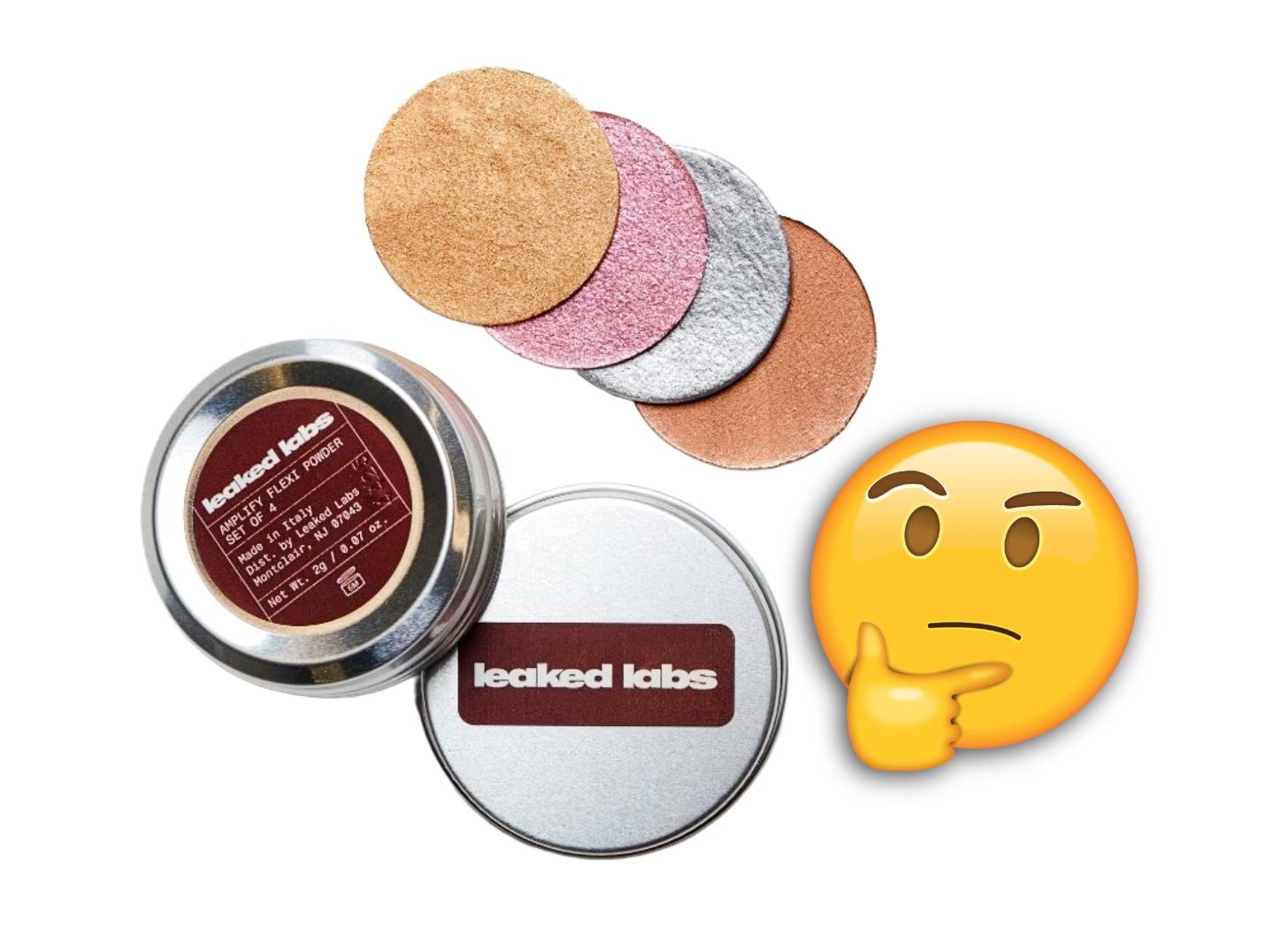
If you follow the beauty community on social media, you’ve seen the Lipstick Lesbians’ Leaked Labs controversy - the launch, the product selling out, the backlash, and the (fake) press conference to address all the questions and confusion, which ended up causing more confusion and pissing off a lot of people.
I’ve been flooded with texts, emails, and DMs from folks asking why I’ve been so quiet about this controversy. I’ve been carefully watching this unfold, and I’ve waited to voice my POV because I want to give this controversy the honest, balanced conversation it deserves, because there’s a lot to unpack here. Most of the online narrative has been either too much praise or too much outrage, which is polarizing and prevents us from understanding what’s actually happening.
Now that I’ve done the research and looked at the information through multiple lenses, I’m ready to talk about Leaked Labs.
First, Who Are the Lipstick Lesbians?
If you’re not already following Alexis Androulakis and Dr. Christina Basias, they are known to their 1.75 million combined social media followers as the Lipstick Lesbians.
Here’s the short version:
Alexis spent years in the cosmetic industry, working as a retail makeup artist for NARS (for 9 yrs) before moving into product development. Christina holds a PhD in education technology. Together, they built one of the most genuinely educational beauty platforms on social media. Alexis walks into a Sephora, Ulta, or a high-end department store, picks up a product, swatches it on her hand, and correctly identifies key ingredients and their contributions to a product’s formula. She’s also known for correctly guessing a product’s country of origin (without looking at the label). Many times, she even recognizes the contract manufacturer behind the product.
She has offered all of this premium cosmetic education…for free.
That content has legitimate value. The Lipstick Lesbians occupied a niche that hadn’t been explored very deeply, breaking down the wall between brand, manufacturer, and consumer. People were entertained, engaged, and learned things. That matters. This generous sharing of “insider” cosmetic knowledge laid a foundation of trust, which made what came next so complicated (and messy).
Worth noting:
Before Leaked Labs, Alexis and Christina founded Fem Power Beauty, a lipstick brand they launched in 2019 that, by their own admission, nearly bankrupted them. They self-funded it, it didn’t work out, and they moved on. They’ve been candid about how painful that experience was. Which is exactly why people expected that their next brand would be, as YouTube creator Kiki Chanel put it, “ironclad” - bulletproof, built on everything they’d learned from their previous failure. That expectation matters and is why the reaction to Leaked Lab’s debut product was so intense.
So What is Leaked Labs?
In March 2026, the Lipstick Lesbians launched Leaked Labs, a cosmetic product incubator that sources innovative cosmetic products directly from manufacturers’ in-house R&D libraries. These innovations have been presented by the manufacturers at trade shows and in product development meetings, but were passed over by cosmetic brands, for whatever reason(s).
The Leaked Labs debut product, Leak 001: Amplify Flexi Powder, is a pigment disc built on a carrageenan-based flexible membrane technology that reactivates when dampened with water or setting spray. Amplify Flexi Powder was retailed as a set of four of these flexible discs in metallic shades, housed in a small generic tin with sticker labeling, for $34.00 USD ($40 with shipping).
The product sold out the day it launched.
The brand premise:
Instead of waiting the typical 12 to 36 months for product innovations to wind through development timelines, Leaked Labs sources existing lab-stage formulas, what Alexis called “innovation orphans”, because nobody wanted them, and releases them directly to consumers in limited quantities.
You’re not really buying a retail-ready product (although the marketing makes it sound that way). You’re buying into the development process. Your feedback, as a verified purchaser, determines whether the product becomes a permanent offering or rides off into the archival sunset.
The concept has genuine intellectual appeal on paper, especially for anyone who’s ever seen a disruptive, stand-out formula at a trade show, only to watch it get shelved because no brand saw the value in developing it further for consumers.
I’ve been a brand and product development consultant for almost three decades, and I’ve often been frustrated by a client’s lack of motivation to pursue genuine innovation. They default to imitating successful products from competitors because it’s a “safer” investment.
What Went Wrong (And It’s Not What You Think)
I realize the brand founders don’t agree, but the criticism of the product was real and fair.
Consumers documented inconsistent disc thickness across shades, with some paper-thin and others substantially thicker.
A common complaint was the discs ripping on first use, possibly because the user made it too wet or didn’t handle it gently enough.
One reviewer noted the product had degraded into what she described as a “gelatinous blob” within a week of leaving it in open air, indicating that Flexi Powder absorbs moisture from the atmosphere and must be stored in an airtight container when not in use to preserve its stability. BUT you have to make sure each disc is completely bone dry before you store it back in the tin, or the residual moisture in the closed tin will dissolve the discs and could become a breeding ground for bacteria.
Flexi Powder, in its current form, has the potential to create a sanitation nightmare in a professional makeup artist’s kit.
The swatches, even in the brand’s own promotional videos, were inconsistent. So the product has a distinct learning curve, which is not presented clearly in the marketing. Comparable liquid, cream, and gel eyeshadow formats already exist in the market in more user-friendly delivery systems.
This raised an obvious consumer question: If there are existing products that offer the same results, in a far more user-friendly format, what problem is this product solving?
But here’s where it gets more interesting than a bad product launch. The core issue wasn’t the Flexi Powder itself. It was the business model, and what it asks of consumers.
Kiki Chanel, whose nearly hour-long breakdown of the launch has racked up almost a million views, put the structural argument most clearly. Leaked Labs has found a way to transfer all of the risk onto the consumer. In a traditional focus group, the brand either pays participants or, at a minimum, compensates them in some way, because consumer feedback has real economic value.
Leaked Labs inverts that concept entirely. Consumers pay $34 plus shipping ($40 total) to receive lab samples, provide feedback, and essentially conduct the market research for them.
If the product fails? The consumer is out $40. The brand loses nothing. In fact, the brand got paid to learn that their product doesn’t work.
As one commenter framed it with uncomfortable clarity: “Collecting data from people while charging them to participate in a focus group isn’t user research—it’s exploitation.”
And then came the detail that, for me, tips this from a controversial business model into something that genuinely needs to be called out.
In a clip circulating on social media, recorded during the launch window while consumers were waiting for their shipments to arrive, Alexis mentioned she was already reformulating the Flexi Powder. Let that sink in for a moment.
The brand’s explicit promise was that these products are finished, safety-tested, and ready for consumer hands. Not prototypes. Not works in progress. Not lab samples. Finished goods. And yet, before the product had even landed on many customers’ doorsteps, the founder was already on record saying she was reworking it.
If the product was truly finished and ready, what exactly is being reformulated?
The reviews documented a product that ripped apart easily during use, or degraded into a gelatinous blob within a week of exposure to air, with wildly inconsistent disc thickness across shades. That is not aesthetic nitpicking. Those are stability issues. The kind that gets flagged and corrected during a PROPER development process.
That clip where Alexis makes the reformulation statement shouldn’t be considered a footnote. It’s the thread that unravels their whole narrative. You cannot simultaneously tell consumers they purchased a finished product and tell a social media audience you’re not satisfied with its performance and are already fixing it. That’s not a communication problem. That’s a credibility problem that damages trust.
The ‘State of the Union’ Made It Worse
When the backlash hit, the Lipstick Lesbians addressed the criticism by posting a response video that felt like a staged FAQ briefing - they called it a Leaked Labs’ “State of the Union”. The intent was transparency, but the delivery read as condescending and combative.
The State of the Union video’s central claim, “you’re not paying to do the work for us,” was in direct conflict with their earlier Leaked Labs messaging.
They had used the words “lab sample.” They had described customers as part of “beauty’s largest public focus group that’s being documented.” A founder publicly stated that they were reworking the product while some customers were just receiving the version she no longer considered good enough. And when negative reviews came in, the brand responded by liking a comment that said people who don’t work in the industry “just don’t get it,” - which is a strange message from two people who built their entire platform on the promise of making the industry transparent and understandable to everyone.
SIDE NOTE: I’ve worked in the cosmetic industry for over 4 decades, and even I don’t “get” this brand’s DNA or mission statement when you look at how it’s being marketed. So they need to stop being so condescending to people who are filling their pockets with $$$.
The feedback survey, when it arrived, asked customers to write in their own words how the product could be improved and what would make it stand out more. That is, functionally, asking paying customers to do the product development for you. The survey came weeks after the launch, after the brand stated they were reworking the formula. A little too late to feel like genuine engagement rather than damage control.
Days after the State of the Union, they pinned a comment acknowledging the video “missed the mark on tone,” while noting they were traveling and would respond to concerns when they returned. That timing, for a brand in active crisis communication mode, did not help.
What the Industry Actually Thinks
The professional consensus is more nuanced than the consumer outcry. The underlying concept, using consumer response to validate formulas before committing to full commercial production, has merit. It flips a process that usually requires manufacturers to convince brands to invest in new technology, without knowing if consumers actually want it. That’s legitimately smart.
The concern from industry professionals wasn’t the feedback loop itself. It was the framing. The narrative that these formulas are hidden treasures that the industry has been keeping from you misrepresents why most lab-stage formulas don’t make it to market. Sometimes it’s corporate inertia. Sometimes it’s a timeline. And sometimes it’s because the formula had unsolved problems that made it commercially unviable. One developer noted it plainly: a lab sample and a finished product are not the same thing, and the distance between them is where most of the actual science happens.
There’s a specific piece of context worth knowing.
L’Oreal has held patents on this type of polymer film technology since around 2010. So, the Leaked Labs “never been done before” framing oversells the innovation while notably omitting why no one has used the technology. A formula that’s been technically possible for fifteen-plus years and still hasn’t reached market has, by definition, been evaluated and passed over more than once FOR GOOD REASON.
What I Think They Got Right
I want to be careful here, because I think Alexis and Christina are genuinely talented, and I think the instinct behind Leaked Labs came from a real place. Alexis has decades of cosmetic experience. She knows this world. The frustration of watching innovative formulas gather dust in the “frustration drawer” (her phrase) is real and industry-wide. The desire to close the gap between discovery and consumer access is legitimate.
The sustainability angle is genuinely interesting. A business model that only scales what consumers actually want, using sustainable formats that don’t contribute to packaging waste, has real environmental merit. Very few reviews addressed that, which suggests the launch communication prioritized concept over consumer benefit.
The seed of the idea, that the wall between consumer and manufacturer could come down, that people could engage with beauty innovation before it gets focus-grouped into mediocrity, is worth pursuing. Just not like this.
The Precedent Problem
Here’s what keeps me up at night about this whole situation, and it’s the point Kiki Chanel makes most forcefully in her breakdown: this is a precedent conversation, not just a product conversation.
If Leaked Labs succeeds, if this model gets normalized, the beauty industry will notice. Brands are already watching their margins and looking for ways to reduce the cost and risk of innovation. A model in which consumers fund the market research, generate the content, provide the feedback, and absorb the financial risk of an underperforming product is extremely attractive from a business logic standpoint.
That’s the danger.
Not that one brand tried something unconventional, but that an unconventional model gets copy-pasted industry-wide before anyone has seriously interrogated what it costs consumers.
Consumer feedback has always had economic value. The beauty industry has always paid for it, through focus groups, paid panels, seeding programs, and product sampling. The moment we accept paying for that privilege ourselves, we’ve handed something real away. And once a precedent is set in this industry, it tends to stick.
#MyTwoCents
I’ll be honest: I root for Alexis and Christina. They built something real before they built a brand, and that foundation matters. But trust isn’t just about transparency. It’s about what you do with the trust people have already extended to you. Their audience showed up with years of goodwill, genuine belief in their expertise, and real money. That deserves a product that’s been finished, tested, and packaged with the same care they’ve always told us to demand from other brands.
The concept of consumer participation in innovation is not the problem. The problem is asking people to pay for the privilege of doing your work, then framing their reasonable questions as a failure of comprehension. The audience understood exactly what was happening. They realized they were being taken advantage of, and they were upset.
But I keep coming back to the reformulation. That’s the detail I can’t get past. Because everything else, the messy launch, the defensive State of the Union, the late survey, the condescending liked comment, could in theory be chalked up to first-brand growing pains. Miscalculated messaging. Underestimating the audience’s reaction. We’ve all seen founders stumble on their communication and recover.
Reformulating a product you just charged $34 for, while customers are still opening their packages, is different. That’s not a communication problem. That’s a product problem. If the product wasn’t ready, it shouldn’t have shipped. Full stop.
Product development is exciting and very fulfilling - if you follow the correct steps.
Develop innovative products with the end user in mind. If the innovation doesn’t enrich or simplify the user’s life, it’s not viable in the current marketplace.
Finish and stability test the product properly, and only bring it to market when it’s ready.
Present your product in consumer-friendly retail packaging.
Charge a fair price.
Learn from your reviews and consumer feedback, and don’t become defensive or combative if the product isn't well-received.
That’s not a revolutionary business model; it’s the foundation of building consumer trust. And trust, once lost, is difficult to rebuild.
Leaked Labs “Leak 002” will tell us everything we need to know about whether the Lipstick Lesbians are listening rather than reacting.
What do you think?
Kevin James Bennett is the publisher of In My Kit®. He is an Emmy Award-winning makeup artist, cosmetic developer, educator, and consumer advocate. Learn more at www.kjbennett.com
One thing that springs to mind is that it seems they are trying to replicate what Rephr says/does, but with color cosmetics rather than brushes. Rephr has their “Concept store”, mention working with their community and “We use customer feedback to design world-class products.” Unfortunately, using lab samples that no one has wanted for years is not going to be successful because they were bypassed for good reasons!
I’m seeing lawsuit.
Perhaps they should have considered something like a subscription box where they explicitly communicate what’s in the box and what is expected of consumers once they buy the subscription. (I think true beauty enthusiasts would love to be a part of testing/creating products) The founders then collect feedback and decide if they move forward and make improvements to bring to market, or they trash it once and for all. What you don’t do is sell a full size product at full price hoping consumers don’t notice it’s unstable, or gaslighting them once they do. That’s must be a crime of some sort.