

Influencers, Brands, Ethics and $$$.
Have you noticed how heated conversations become over the topic of how much money brands pay top social media beauty influencers? Let's Discuss.

Why is it controversial to discuss the income and extravagant gifts Social Media Influencers receive from the brands they review? Top real estate agents pride themselves on their place in the hierarchy and have no problem broadcasting the impressive commissions they make.
Are top beauty influencers trying to keep their income a secret?
Well, if they are, most are doing a terrible job. Their income is apparent - look at the real estate, cars, jewelry, and clothing they blatantly flaunt on social media and in the press. If they wanted you to believe they're just regular folks like us, why so much flexing?
All that Chanel, Vuitton, Gucci, and Cartier is coming from somewhere. #JustSaying
Let's Define "Influencers".
There's growing confusion over the difference between the titles of content creator and influencer.
Content creators create content (duh). Being a social media content creator can be a job, but it can also be a hobby, and it's not always compensated ($$$).
Being a Social Media Influencer IS A JOB. They are called "influencers" for a specific reason. Their JOB is to influence you, their follower, to buy the products or services they review or recommend. They are compensated (paid) for the sales they generate. If you think this description sounds like a salesperson, you're not wrong - that's exactly what they are.
Let's repeat that to ensure everybody understands: a top-level Social Media Influencer is a SALESPERSON. PERIOD.
The major money-makers at the top level of influencer tiers are:
Macro-Influencers: Follower Count between 100,000 and 1,000,000.
Mega-Influencers: Follower Count over 1,000,000 followers.
Most Macro and Mega Influencers consider “social media influencing” their primary source of income (job). Because this is their full-time job, many will not mention or review ANYTHING without compensation (a flat fee, a sponsorship, or a percentage of the retail sales they generate through affiliate links/codes).
Numbers Don't Lie.
The figures in the image below are averages based on actual rate schedules of top beauty influencers, as provided by their management to cosmetic marketing teams. Some make less, and some make much more.
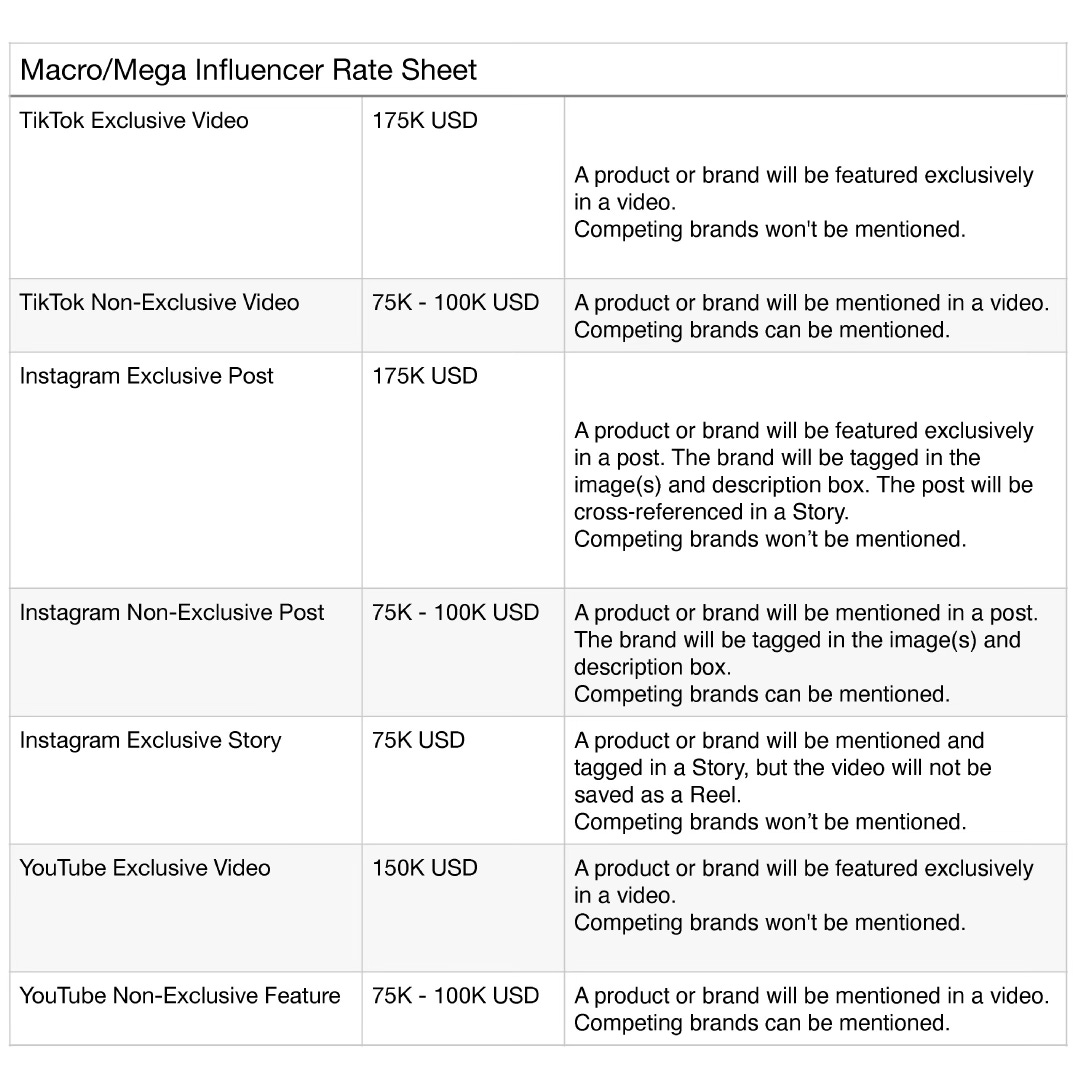
Note: One very popular (and often controversial) beauty influencer makes up to $250K for a dedicated product/brand review (yes, a quarter of a million dollars).
Macro and Mega social media beauty influencers also enjoy many other job-related perks, such as all-expense-paid luxury travel, invites to high-profile events, and expensive gifts (bags, jewelry, etc.).
But Why Do Brands Pay Them So Much?
Advertising in major fashion and lifestyle magazines and on TV is costly. A 30-second ad appearing during a top-rated entertainment, sports, or news show on TV can cost $millions. A full-page ad in a top fashion or lifestyle publication (like Vogue or In Style) can cost up to $250K.
These print and TV ads reach a limited audience who might not be receptive to what you're selling.
Social Media Influencers have already done the work of building a following of potential customers for you. People who follow "beauty" influencers are interested in cosmetics (makeup, skincare, haircare), so cosmetic brands are willing to pay influencers to access their followers because they know it will automatically result in a higher ROI (Return On Investment) because it's a targeted audience.
Think about it: If you could pay a beauty influencer $150K and get the same ROI you would realize from a multi-million dollar print and TV advertising campaign, which would you choose?
So, the sizable fees and commissions paid to top-level beauty influencers are considered smart marketing choices by cosmetic brands because they cost a fraction of what would be spent on standard advertising.
But why do brands and influencers get so defensive when we discuss these numbers ($$$) publically?
I respect the hustle of influencers. Getting paid big dollars and receiving expensive gifts to talk about cosmetics is a great gig—IF you follow the rules.
However, MANY Macro and Mega influencers are not following proper FTC INFLUENCER DISCLOSURE GUIDELINES. When confronted about not practicing proper LEGAL disclosure of their compensation for a review, many influencers deflect and LIE. And the brands that pay them are duplicitous and quick to look the other way if non-disclosure means higher sales.
⠀
But Why Do They Refuse to Disclose?
Brands expect a substantial ROI (Return On Investment) when paying a top influencer, which causes many influencers to stress about generating enough sales to retain their position in the beauty influencer community's hierarchy.
Many top influencers feel that if they disclose they've been paid to review products or services favorably, their followers will question the review's authenticity and be less easily influenced to purchase.
Macro and Mega influencers worry that their posts will not meet the brand's conversion expectations if they properly disclose their compensation (per FTC guidelines).
NOTE: Conversion is how well an influencer’s post "converts" into sales for the brand that is paying them.
Because they need to produce high conversion rates to continue demanding top dollar for their posts, most Macro and Mega influencers disclose as little as possible. They typically bury any disclosure information where a follower will not see it easily and often use confusing verbiage that doesn’t fully disclose their compensation.
Some DON'T DISCLOSE AT ALL.
(looking at you Micayla, Madeline, Glamzilla, Jaclyn, James, etc.).
According to FTC Influencer Disclosure Guidelines, improperly labeled disclosure or complete non-disclosure is misleading, unethical, and ILLEGAL.
In Closing.⠀
If the FTC enforced disclosure regulations more aggressively and handed out substantial fines, we would see a profound change in the credibility of beauty social media marketing.
So, if you're suspicious about the motivation behind a top influencer's glowing product review, it's probably a paid advertisement.
The most reliable source for honest cosmetic reviews is industry experts who receive no compensation.
They develop their reviews by:
Researching the ingredients for safety and efficacy.
Testing the product's performance under professional working conditions to see if they meet claims made by the brand.
Offering a final conclusion based on their years of education and industry experience.
Where do you go for recommendations before you buy cosmetics (hair, skincare, makeup)?
Kevin, I really appreciate your breakdown and explanation of the system. Every time I watch an influencer video, I always scroll down to see if it's sponsored, and it rarely reveals the truth. Another sneaky way they get around it is to regularly use certain products in GRWM content. I notice that the products are on 1 week or 1 month rotations. Months later, we see them receive luxury gifts and exotic vacations with those brands.
On the other side of this, as an over 50 mini micro content creator, I'm barely getting PR, then offered $300 or less for exclusive content on all platforms with usage rights in perpetuity. Guess the algorithm isn't interested in the truth of what a mature face looks like and what formulas works for them, even though we are the demographic who can afford to buy it.