

Hairstory Launches at Ulta - Who Are Their Products For and Who Should Stay Away?
Hairstory is a brand with a genuine origin story and real innovation, but some of its marketing claims deserve a closer look before you spend $48 on shampoo.

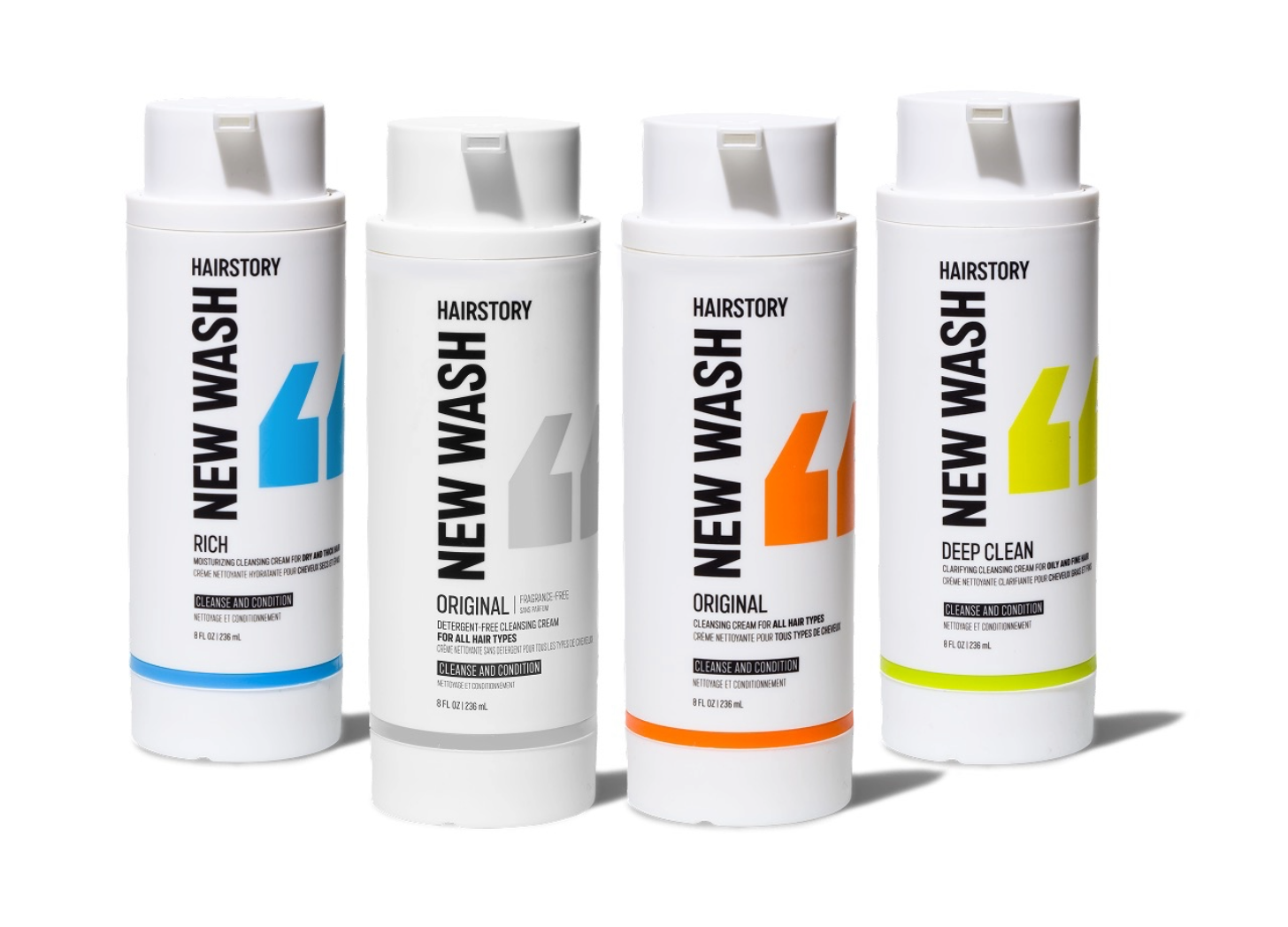
Hairstory just made its first move into brick-and-mortar retail.
As of April 5, the cult-favorite New Wash conditioning shampoo (co-wash) is on shelves at 370 Ulta Beauty stores and Ulta.com. For a brand that spent twelve years selling almost exclusively through salons and its own website, this is a big deal.
I’ve not only tracked Hairstory since its launch, but I was also a New Wash customer for a while. There’s a lot to like. But some of its marketing needs a reality check and some clarification, especially for folks with specific hair concerns.
Now that the brand is about to reach a much wider audience, let’s dive into exactly who should use New Wash and who should stay away.
Where This Brand Came From
The founder, Michael Gordon, isn’t some beauty influencer or celebrity who decided to launch a hair line. He’s the guy who built Bumble & Bumble from the ground up before selling it to Estée Lauder in 2006. He knows this industry inside and out. And after the sale, instead of cashing out and disappearing into the sunset, he spent years trying to solve a problem that had been bothering him for decades.
That problem? Shampoo.
Most traditional shampoos are built around a detergent called sodium lauryl sulfate (SLS). It’s what makes your shampoo lather, and it’s effective at cleaning. Maybe a little too effective. For many people, especially those with dry, color-treated, curly, or coarse hair, it strips the scalp of everything, including the natural oils your hair actually needs. Then you buy conditioner to restore moisture. Then, a targeted treatment to repair the damage (caused by the shampoo). It’s an endless loop, and it’s a loop the industry is quite happy to keep you in.
Now, to be fair, the industry has already moved on from the harshest formulas. Most mainstream shampoos today use Sodium Laureth Sulfate (SLES), a milder cousin of SLS that’s considerably gentler. And there’s a whole range of other mild modern cleansers that have become standard in more refined formulas. Cocamidopropyl Betaine, derived from coconut oil, is one of the most common secondary surfactants and is significantly gentler than SLS. Sodium Cocoyl Isethionate gives a creamy, gentle lather with minimal stripping. The glucosides, Coco Glucoside, Decyl Glucoside, and Lauryl Glucoside, are sugar and coconut-derived, very mild, and common in baby shampoo and sensitive-scalp formulas. Amino acid-based cleansers like Sodium Lauroyl Glutamate and Sodium Lauroyl Sarcosinate are appearing more frequently in prestige formulas and are very gentle yet effective at cleansing.
There’s also one worth flagging as a marketing sleight of hand: Sodium Coco Sulfate (SCS). You’ll see it on labels of brands that advertise themselves as SLS-free and coconut-derived. The catch? It’s a coconut oil sulfate that still contains the same lauryl sulfate chains as SLS, just dressed up in more natural-sounding language. Functionally, it’s nearly identical.
”SLS-free” doesn’t always mean what it sounds like.
Gordon’s answer to all of this was New Wash: a hair cleansing cream with no detergent at all. It cleans with natural oils and fatty acids rather than a lather. And one product does the job of both shampoo and conditioner.
The concept isn’t new; it’s called co-washing, and it’s been a staple in curly/coily hair care for years. But Gordon cleverly repackaged the technology for a broader audience, backed it with real salon development, and built a devoted following.
Over two million units sold before landing in a national retailer.
That’s genuinely impressive.
The binary he built the brand around, harsh detergent shampoo versus no detergent shampoo, made perfect sense - a decade ago. That doesn’t mean New Wash is irrelevant. It just means the conversation about co-washing hair has become more nuanced than their marketing suggests.
What the Brand Gets Right
For the right hair type, New Wash is legitimately excellent.
If your hair is naturally dry, coarse, curly, or fried from aggressive color-treatment, this product was designed for you. Skipping harsh detergents and conditioning while you cleanse makes real sense. Less stripping, less damage, better color retention. Many people who’ve switched report softer, healthier hair, and they’re not wrong.
The brand’s original commitment to sell through salons also matters. Hairstory’s history (and credibility) was built on its reliance on salon professionals, who can tell you honestly whether a product is right for you. That’s a very different model from most brands, which just want to move more product and let consumers figure out what works for them at their own expense ($$$).
The refillable packaging is grounded in genuine sustainability; it’s not a PR stunt. And the “fewer, better products” philosophy is consistent with what they offer - right now.
NOTE: The “fewer, better” philosophy often changes abruptly because some national retailers demand that a brand regularly offer new products to drive sales (this is how Sephora has destroyed sooooooo many brands).
Now Let’s Talk About the Part They’re Getting Wrong
The “all hair types” claim.
When you look at the description of New Wash “Original” Formula, it clearly states on both the Amazon shop and the Hairstory website that it’s a “Cleansing & Conditioning Cream FOR ALL HAIR TYPES”.
And yet, Hairstory also sells three (3) other versions - Rich, Deep, and Fragrance-Free. You can’t say one of your formulas works for everyone while also offering additional versions to address different needs. That’s contradictory marketing and deserves to be called out.
And if this co-washing system is so effective, why does Hairstory also offer a PRE-WASH Prebiotic Micellar Scalp Rinse to remove build-up before you use New Wash?
Here’s the reality: Co-washing is not for everyone. If your hair is fine, bone straight, or tends toward oiliness, adding lots of oils and creamy conditioning agents to your scalp won’t clean it. It’s going to coat it. And product buildup on the scalp can cause inflammation, clog follicles, and, over time, contribute to thinning. That’s not a scare tactic, it’s basic scalp biology backed by published research and documented by the American Hair Loss Association.
The “your scalp will stop overproducing oil” promise.
This one really bothers me. Hairstory claims that once you switch to New Wash, your scalp will eventually stop overproducing oil. The idea is that years of harsh shampooing have trained your scalp to overproduce, and now it can relax.
Here’s the reality: Your scalp’s oil production is controlled by hormones, not by your choice of cleanser. There’s a modest argument that extremely aggressive shampooing could contribute to some reactive oil production in certain people. But the broad promise that New Wash will regulate your sebum? That claim runs well ahead of the science.
The “transition period” bullsh*t.
When people with fine or oily hair try New Wash and report greasy, heavy, flat results (an issue which reviews verify happens consistently), the brand’s default response is: "You're in a transition period. Your scalp is adjusting. Try using more product, or rinse longer.”
Telling a customer that their bad experience with your product proves it's working is gaslighting them and avoiding accountability. They aren’t experiencing a “transition period” - the reality is that this product is a mismatch for their hair and scalp needs.
If this “transition period” dialogue sounds familiar, it should. The skincare industry has been gaslighting consumers for years under the term “skin purging.”
To be fair, purging is a real thing, but only with specific ingredients, like prescription retinoids or certain exfoliants, that accelerate cell turnover and briefly uncover underlying congestion. That’s a legitimate response to a legitimate mechanism.
But somewhere along the way, the industry stretched that logic to avoid accountability for people’s reactions to skincare:
New Cleanser breaking you out or causing irritation? It’s Purging.
New Serum or Essence breaking you out or causing irritation? It’s Purging.
New Moisturizer breaking you out or causing irritation? It’s Purging.
“Skin purging” became a catch-all excuse for products that were simply wrong for someone’s skin. “Transition period” is the Hairstory version of the same bullsh*t excuse.
So What Happens at Ulta?
For most of its life, Hairstory had a built-in filter: the salon professional. A good stylist would look at your hair, assess your scalp, and tell you honestly whether New Wash made sense for you. That filter doesn’t exist in Ulta.
The typical Ulta shopper who picks up a premium “shampoo alternative” is completely unaware that co-washing may not be the right call for them because New Wash Original Formula makes the misleading “All Hair Types” claim.
The brand says it plans to use Ulta’s in-store salon space for consumer education, which is a great idea - but those salons reach only a fraction of the foot traffic in Ulta.
New Wash has the potential to convert the right customers into lifelong fans. My question is, what happens when a significant number of Ulta customers have a bad experience with New Wash and don’t understand why, because the brand's marketing tells them it’s their fault?
#MyTwoCents
Michael Gordon built something real here. A brand with actual roots in professional expertise, a genuine formulation philosophy, and the patience to grow slowly and do it right. That deserves credit.
But I’d be doing you a disservice if I just told you that part and left out the rest.
If you have dry, coarse, curly, or color-treated hair, New Wash is absolutely worth trying. It might genuinely change your hair.
If you have fine hair, an oily scalp, or you’re concerned about thinning, skip it. Not because it’s a bad product, but because it’s the wrong product for your hair. No transition period is going to change that.
And if a brand has the audacity to tell you your dissatisfaction is actually progress? That’s usually a sign they know the fit isn’t right for everyone, and they’d rather not say it out loud.
So, now you know the whole story, and I hope it helps you make an informed decision if you're considering trying New Wash by Hairstory.
Kevin James Bennett is the publisher of In My Kit®. He is an Emmy Award-winning makeup artist, cosmetic developer, educator, and consumer advocate. Learn more at www.kjbennett.com
I haven’t been paying any attention whatsoever to beauty launches. However, I’ve been needing a new shampoo for like 20 years so definitely trying this.
I saw the launch on the Ulta app, as someone often lured in to the sparkle and shine of a new brand/product, I appreciate your report of the historicals of what and why .. knowing that it may be for you or not for you means a lot .. as a reminder that IT’S OK.. it’s not you .. it’s me.