

Brad Pitt's (failed) Skincare Cash-Grab Gets a Makeover
But will a new name and new packaging prevent it from failing AGAIN?

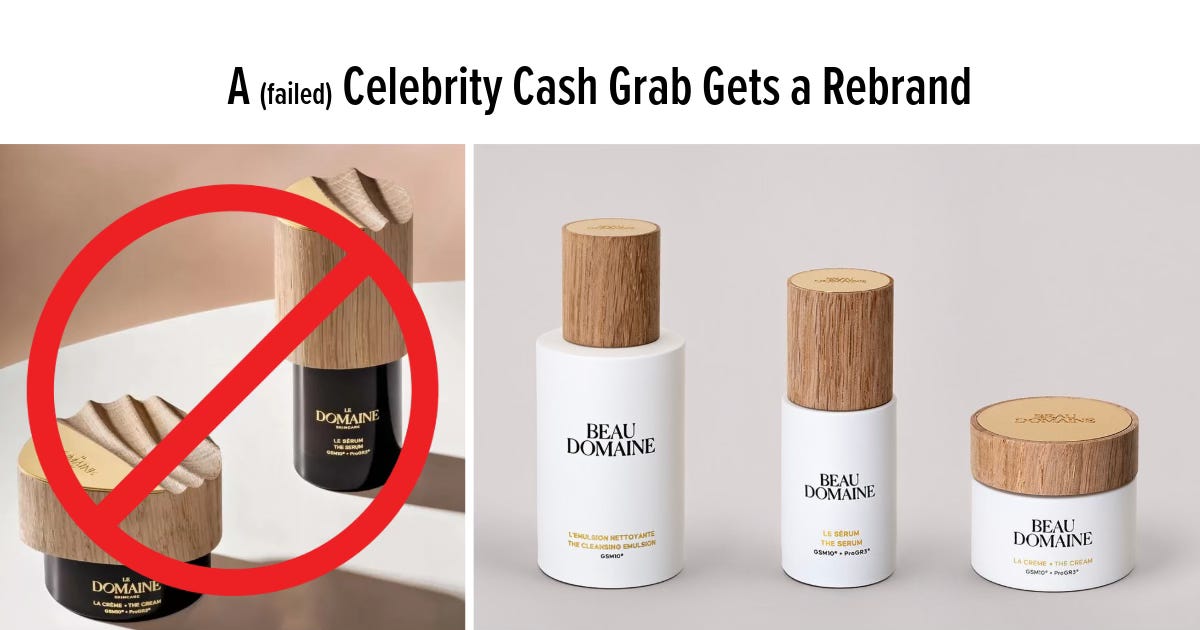
Brad Pitt's celebrity-driven skincare brand has undergone a rebranding, transforming from "Le Domaine" to "Beau Domaine" in what appears to be an effort to pivot following its initial dismal reception. Interesting that the timing of the rebrand aligns perfectly with Pitt's success with his “F1” film. 🤨
A Cash-Grab That Lost Its Grip
This makeover stems from the original 2022 debut of "Le Domaine", which reportedly fell short of projections, with the brand struggling to establish a foothold beyond its initial celebrity buzz. It failed to generate market enthusiasm in several key forms.
The launch faced immediate criticism from beauty industry professionals who viewed it as another opportunistic celebrity cash grab. Independent beauty entrepreneurs, many of whom had spent years building their brands from the ground up, were particularly vocal about their frustration with Hollywood figures effortlessly sliding into the market with instant access to preferential media coverage.
On the consumer side, the high price points created an immediate barrier for many potential customers, while those willing to pay premium prices found the products didn't deliver results that justified the cost. Reviews were mixed at best, with many noting that similar or superior formulations were available at a fraction of the price.
The brand's messaging around the "luxury of time" and slow-aging philosophy struck many as tone-deaf, given that it came from a global celebrity whose career and lifestyle are fundamentally disconnected from the average consumer. Critics also highlighted the paradox of selling “anti-aging” products while, in the same breath, promoting the acceptance of aging gracefully. Consumers took note of this contradiction and quickly questioned the validity of the brand’s mission statement.
The brand also faced logistical challenges, including limited distribution due to global compliance, which made it difficult for even interested consumers to actually purchase the products.
The Black & White Of It All
The rebrand centers around its new "luminous white" packaging, which the company describes as reflecting "both the purity and scientific precision behind the brand's formulations" while reducing its carbon footprint.
The shift from the original black packaging to white is being presented as some sort of design breakthrough, when in reality it's simply a color change that countless beauty brands have made throughout their lifespans. It's an interesting choice to emphasize environmental responsibility for a brand that underwent a complete overhaul just two years after its launch.
The marketing language is particularly brazen considering that white is the default color of most cosmetic components before any decoration is applied. Essentially, Beau Domaine is attempting to glamorize the most basic, unfinished packaging state as a premium design choice. 🙄
The repackaging is most likely in response to the scrutiny of environmental claims on the original packaging. While Le Domaine marketed itself as eco-conscious, reality told a different story. The packaging relied heavily on non-recyclable materials and components that contradicted the brand's sustainability messaging. This greenwashing approach particularly angered environmentally conscious consumers, who had expected genuine ecological responsibility from a brand positioning itself as an advocate of sustainability.
Sticker Shock
The pricing strategy remains the brand's most contentious characteristic.
Le Domaine launched with price points that placed it firmly in the luxury skincare category. They based the pricing on the founder’s celebrity, charging hundreds of dollars for mediocre product formulations that simply don’t align with the premium pricing.
The brand heavily markets its use of waste materials from Château Miraval, a winery owned by Pitt, as a standout ingredient, positioning what is essentially an agricultural byproduct as a premium skincare ingredient. While upcycling waste is commendable from an environmental standpoint, marketing that presents repurposed waste materials as a luxury ingredient is pretty audacious. The rebrand maintains the same luxury prices, essentially asking consumers to pay a premium price for the same formulations in different packaging.
#MyTwoCents
This rebranding represents a broader disconnect in celebrity beauty launches: the assumption that star power alone can command market share and luxury pricing, regardless of a product’s usefulness/effectiveness.
Let’s be honest, the cosmetic industry has been signing off on celebrity cash grabs on a rinse-and-repeat basis for years. The new twist is that brands are suddenly realizing, thanks to social media reviews, that today’s consumer is more likely to question whether a product’s marketing claims are honest and whether its formulation justifies its price. Consumers have also become increasingly skeptical about the value of products that rely solely on a celebrity's name to build brand traction.
Whether the Beau Domaine rebrand succeeds in turning around the brand’s initial lackluster reception depends less on marketing the new name or refreshed packaging aesthetic and more on whether the brand can still justify its place in an increasingly competitive and oversaturated skincare market solely because Brad Pitt’s name is attached to it.
What are your thoughts about this? Leave a comment and let’s begin a conversation!
kjb - xoxo